If you’re considering a working holiday in Australia or even an extended backpacking trip, you’re bound to have heaps of things on your mind. Contributing author Lauren Fritsky is based in beautiful Sydney and nails out 15 tips to help make your first experience backpacking in Australia stress-free.
Cathay Pacific Airways deposited me in Kingsford Smith International Airport with no apartment lined up, the bare minimum in savings and two suitcases stuffed with my life. It was hot, I’d lost the address to my hotel and I couldn’t get the SIM card in my prepaid phone to work.
I’m happy to report my state of affairs has improved since then. Still, knowing a few things would’ve helped me acclimate to Aussie life a bit easier.
Immigration recommends work and holidaymakers bring AUD$5,000. This isn’t enough. Sydney and Melbourne are some of the most expensive cities in the world. Plus, costs for items like produce have shot up since the floods earlier this year.
Consider using a fee-free credit card for some purchases. If you can’t be trusted with plastic, transfer as much money as possible to an Australian bank account to avoid fees of $50 or more for each transfer and debit and ATM withdrawal surcharges from both countries.
Hostelling International memberships cost $25 a year and shave a few dollars off your hostel stay each night.
There’s a reason an Australian wrote the “Everybody’s Free (To Wear Sunscreen)” song in the 90s. I got sunburned so bad when I got here, I had a mark on my thigh for almost a month. Did I mention I’m olive-skinned and usually tan?
The out-of-pocket cost for a GP visit is around $60 in Sydney — about $150 less than going to a specialist first. Check out this post for more on travelers’ health insurance in Australia.
You can call the States and Canada from Australia for free on Google phone through 2011. FREE!
I bought a $99 USB modem only to pay $60-plus a month for spotty Internet. I now pay half that for unlimited wireless at my apartment. If you’re hopping about, skip the hostel Internet and head to libraries or McDonald’s to get it for free.
You can get one-way bus fare for the starting rate of a cab in Sydney. It’s then $2 per kilometer plus a 20-percent surcharge if traveling after 10 p.m. Save your money.
Or have someone drive for you. You can explore the many dirt paths, colorful landscapes and coastal areas a lot better if you’re in a two-passenger car instead of a 25-person tour bus.
Chat with old folks, the people born and raised in Oz, the immigrants who came there for a better life. Their stories and observations will open your eyes.
“Suburb” doesn’t mean the same thing in Australia as it does elsewhere. Many Oz suburbs are diverse and alive with a vibrant arts scene and café culture. In fact, you might prefer staying in a suburb over a CBD — rent is heaps cheaper.
Emails go unanswered for weeks, buses rock up 30 minutes late with no explanation and service in restaurants is often non-existent. Just repeat “no worries” to yourself.
I thought I could get another year out of my work and holiday visa by picking fruit. It turns out Americans aren’t eligible, though Canadians and many European citizens are. While one immigration lawyer said I couldn’t get on my American partner’s work visa, it turns out I could (and did). Make sure you research and talk to the right people if you want to stay longer.
Myall Lakes, the Central Coast, Royal National Park and Ku-ring-gai Chase are all beautiful places as worth seeing as Great Ocean Road and the Great Barrier Reef.
Know to say a “flat white with two sugars” when ordering coffee. Call peppers “capsicum,” cheddar cheese “Tasty” and shrimp “prawns.” It’s the Aussie way.
Have you traveled to Australia? Do any of these tips ring true to you? Add your tips for backpacking in Australia to the comments section below.
Continue reading...4 July 2011
Last week I posted a photos of one of my favorite day hikes near Queenstown New Zealand. Hiking is a fantastic way to get a feel for wherever it is you’ve traveled to – plus, it’s budget friendly; as they say, views are nearly always free. Today, contributing writer and Australia based Lauren Fritsky (@laurenfritsky) of The Life that Broke takes us on some of her favorite hikes across the ditch in Sydney.
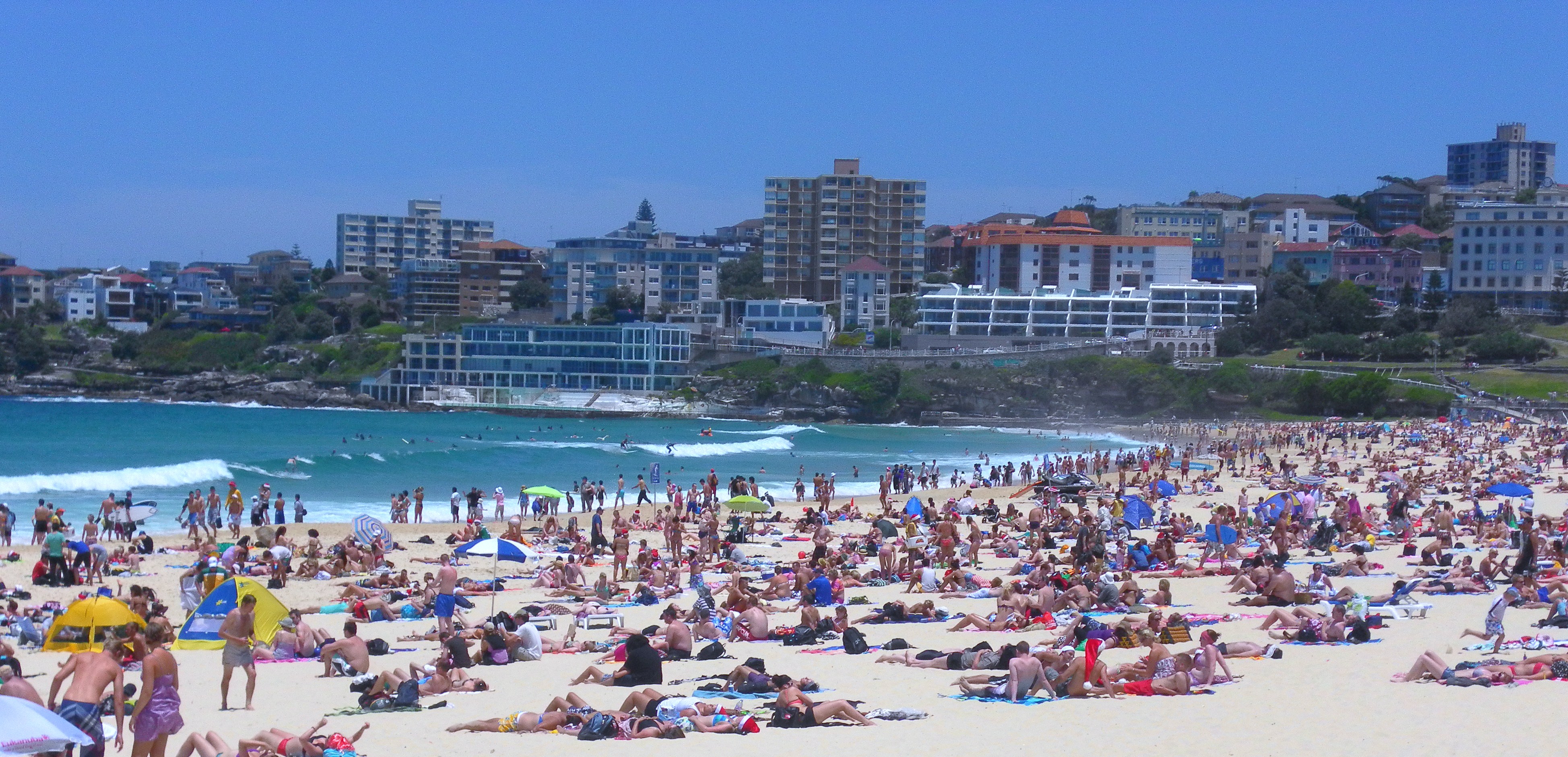
One of the first things I did when I got to Sydney 18 months ago was the Bondi to Coogee walk.
Guidebooks highlight the activity and locals recommend it. I expected just a nice stroll along the water. I got instead endless ocean views punctuated by carved cliffs, greenery and golden shores all along the 5km walk. I didn’t even care that the temperature read 30 Celsius that afternoon.
Since that mid-summer day, I’ve taken heaps more hikes in and around Sydney. From bush to beach, beginner to advanced, short to long, there’s a hike for everyone here.
Next to the Bondi to Coogee walk, Spit to Manly ranks among the most well-known and recommended hikes around Sydney.
It’s 9km total, but you can break it down into more digestible bits if it’s too hot, too hard or you’re too hung-over.
Insects and reptiles, multi-colored flowers and views of Sydney’s Middle Harbour greet you along the way. Stop for a snorkel in the bay on your way to Manly Wharf and you might see a little penguin in addition to the array of fish, shells and other sea life.
At the end of Manly Beach, you can explore an area along the shore with large rocks, small ponds, black crabs and other critters. You get there by walking up the stairs in the back corner of the pools, then up the cliffs overlooking the beach (not the pedestrian walkway to Freshwater).
There are a few larger rocks you’ll have to scale, and it’s rarely a smooth, straight path, so don’t wear thongs or slippery shoes.
You can choose from hikes of varying levels of difficulty at this historical parkland an hour north of Sydney. One of the more challenging ones, the 5.4km Resolute Loop, takes you to Resolute Beach, an isolated strip of shore where you can take a dip in the turquoise water with a few other bathers.
You can also see Aboriginal rock formations along the level portion of the path before the descent to the beach.
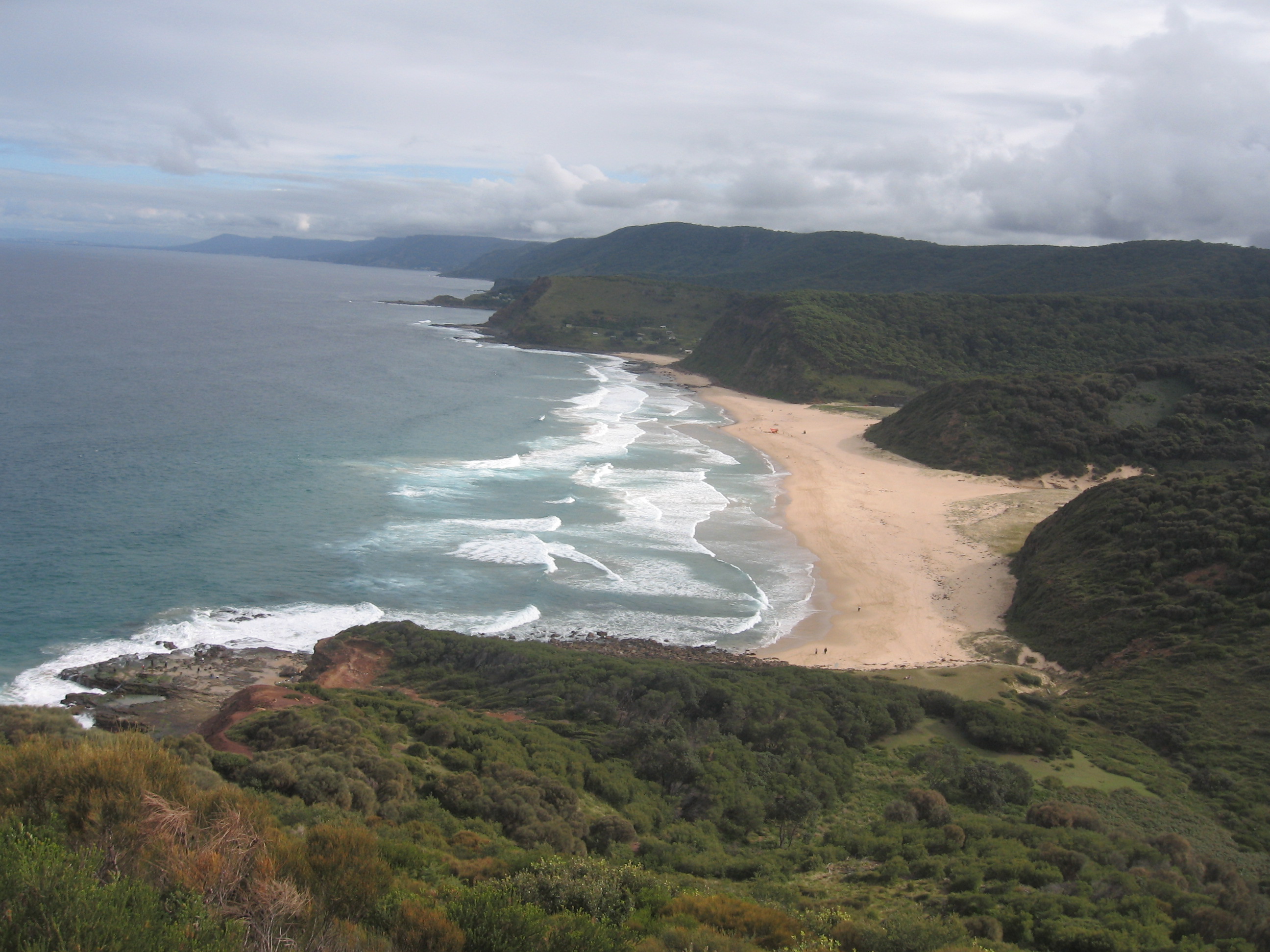
This is another location with a variety of hikes, but one of the more scenic and challenging is the climb up into the headlands if you do the Mowlee Ridge to Garie Beach hike in reverse.
The full 6.7km path will lead you to rock edges covered in heath.
Wilderness walk meets shore stroll as you hike up this hilly 5km track. After taking the Palm Beach ferry to Wagstaff, you’ll climb a hill, then walk a flat ridge through to the bush to some cliffs. You’ll get good views of the sea, the Hawkesbury River and Lion Island from the Box Head ridge. You can also walk down to the bayside beach called Lobster or Tallow Beach on the ocean side.
This list by no means covers all the hiking possibilities in the Sydney area, but it can provide a guide to the new walker.
Have you traveled to Sydney? What are your favorite hikes?
Continue reading...7 April 2011
Today’s Friday Travel Photo was submitted by fellow expat and traveler seeing the world through working holidays, Christine of C’estChristine.com. If you’d like your photo featured in this not-quite-weekly feature, please contact me.
Melbourne has gotten used to Sydney stealing its thunder.
While Melbourne was once the largest and most prominent city in Australia, Sydney has been slowly but steadily chipping away at its cultural prowess and international importance.
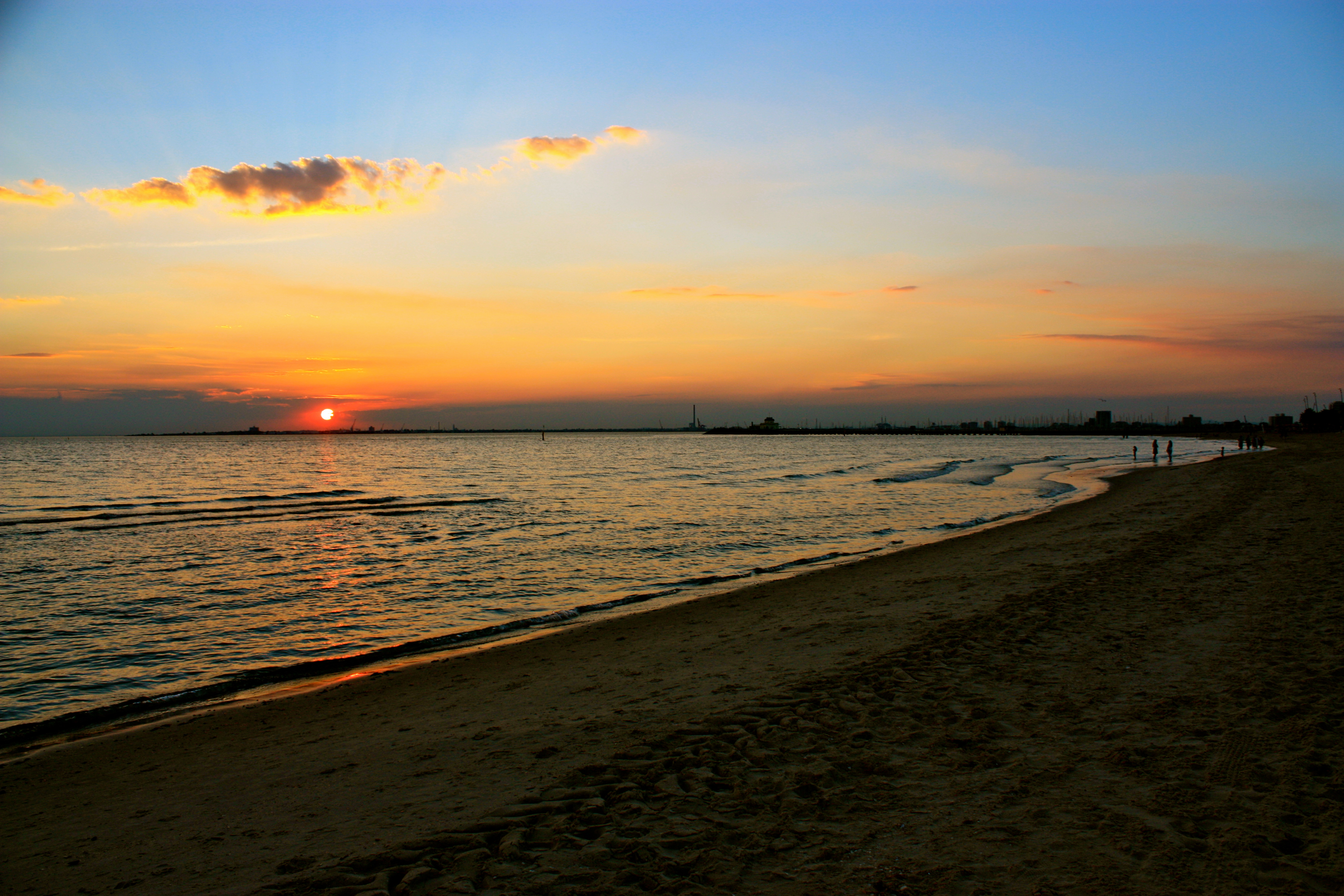
Sure, it’s a bay, and sure, it’s technically in the suburb of St Kilda. But with daily sunsets like this, Melbourne has a special place in my heart. It’s still the cultural center of Australia, but forget the museums and alley cafes–don’t miss a St Kilda sunset when you’re in Melbourne.
Christine is working her way through the beaches of Australia after living on the French Riviera and exploring Europe. When she’s not writing or taking photos, she’s bartending or curled up with a book in the sunshine. Read more at C’est Christine and follow her adventures at @camorose.
Continue reading...
31 January 2011
Imagine road tripping with your best friends along the world-famous Eastern Coast of Australia. You have the open road, fresh Aussie mountain air, and endless deserted white sand beaches Throw a surfboard on the rack and I don’t think you’ll ever leave.
For a couple months in 2010, I traveled the entire eastern coast of Australia with two of my English mates. Throughout this trip, I came across some unbelievable vistas. Sit back and enjoy:
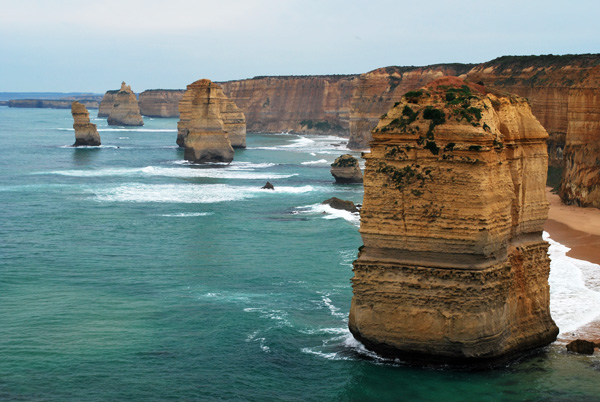
To get to the 12 Apostles, you’ll need to take the Great Ocean Road, Australia’s equivalent to Highway 101 in America. The views along the drive are gorgeous, but nothing compares to the Twelve Apostles.
The huge rocks that jut out of the ocean seem almost unnatural. And as you walk along the cliff edge, look down to see the backs of birds gliding in the wind. It’s a true natural gem. If you surf, bring a board to catch some waves along the drive.
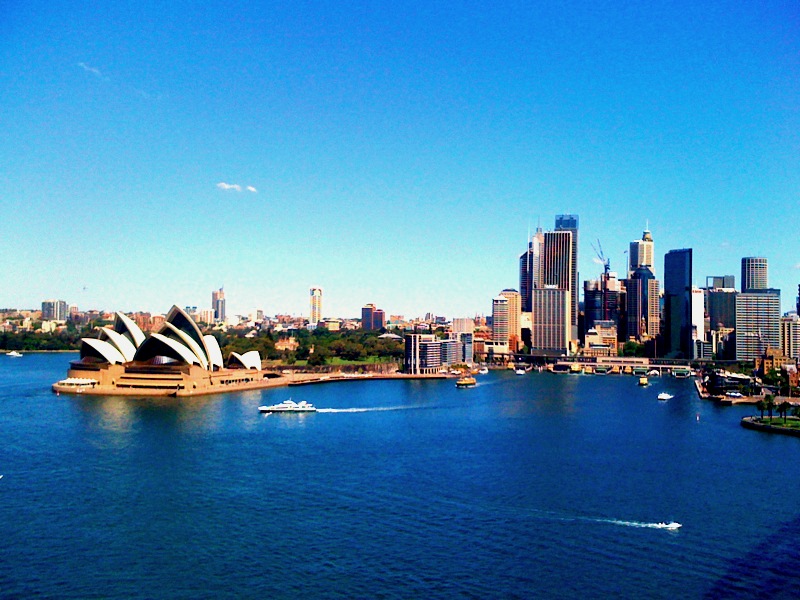
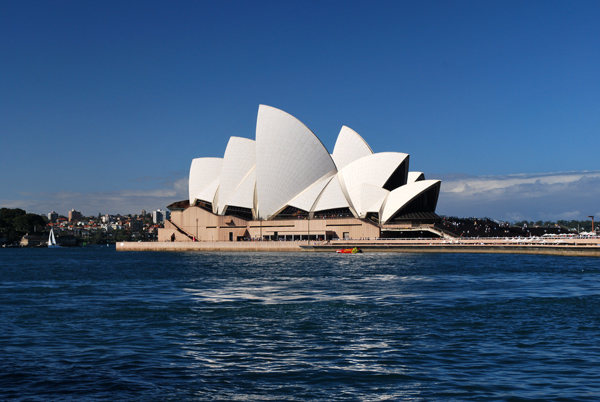
While most people have seen a photo of the Sydney Opera House, it still doesn’t prepare you for seeing it with your own eyes. The Opera House is one the most idyllic monuments in Australia, so it’s a must for anyone backpacking in Australia.
If you wanna catch a show, great. Just be prepared to put a second mortgage on your home to do so.
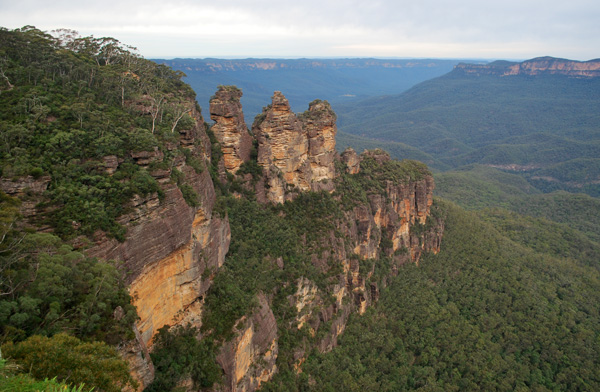
Unanimously voted as a World Heritage site, the Blue Mountains are a great place to camp, watch the sunset, or just take in some amazing views.
The series of cliffs and gorges are blanketed in Eucalyptus. These Eucalyptus give off gases that quite literally give a blue hue to the horizon.
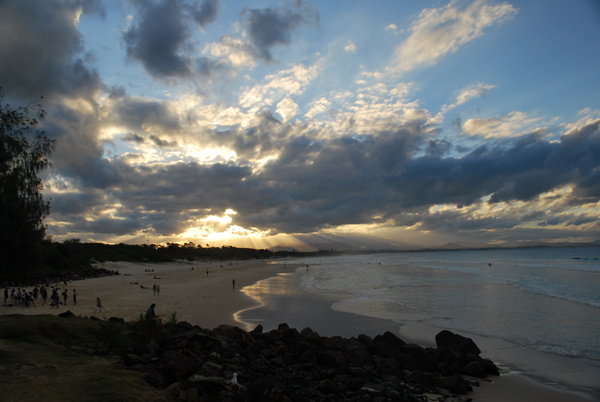
Byron Bay is an absolute backpacker’s haven.
Party at Cheeky Monkey, lounge on the beach, shop, or surf in the waves. Byron Bay has got it all. Just be prepared to get sucked in. I’m one of many who lost a few days of my life to Byron Bay.
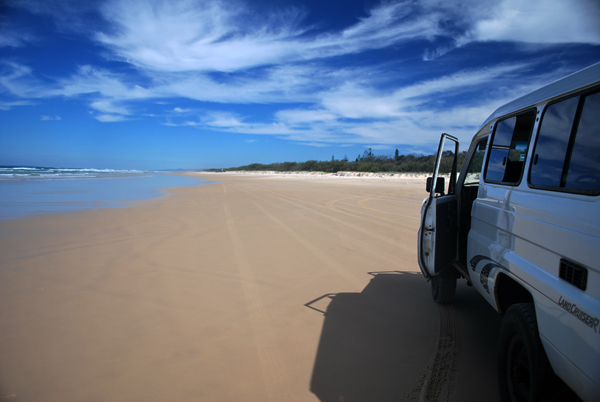
Unfortunately, they don’t let you bomb around the world’s largest sand island in your own rented 4×4 anymore. Instead, you have to be escorted by a guide in a caravan. Luckily for me, I was in one of the last groups able to explore the island on our own.
On the far end of the island is Indian Head, where you can look down and see the shadows of sharks swimming below. In the evenings, sunset over the horizon is nothing short of spectacular as you camp next to wondering dingos.
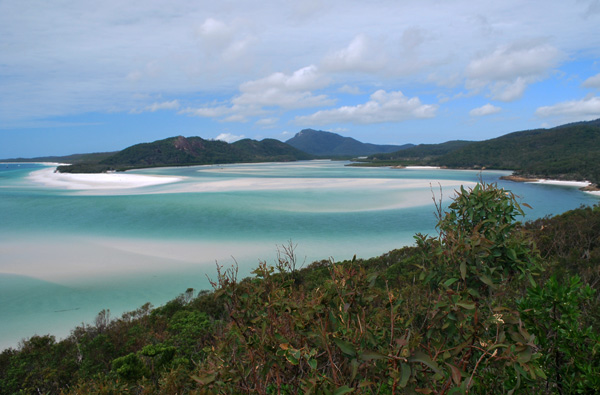
The Whitsundays are home to the world’s whitest and finest sand. In fact, it’s the sand that made the lens for the Hubble Telescope. The contrast between the azure waters and ghost white sand is mesmerizing.
The sand is so fine, you can even use it to clean your teeth. Just be sure not to swallow.
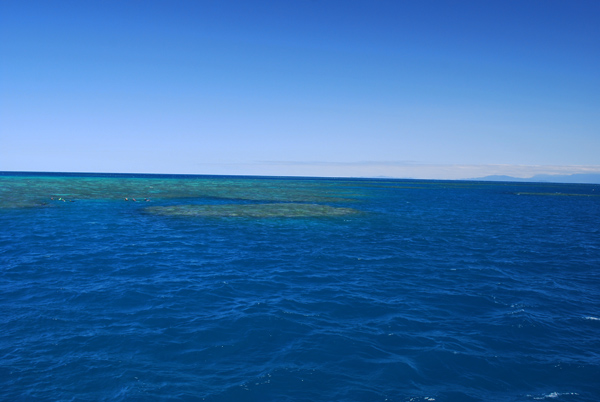
I’ve never seen water so blue as that in the Northeast of Australia. It sometimes hard to distinguish the blue of the water to the blue of the sky. As the world’s largest living organism, the Great Barrier Reef does not disappoint.
Some of these views are compounded in beauty when you throw in a gorgeous pink and orange sunset; others are just plain amazing in their own right.
Don’t take my word for it. Get on a plane and check them out yourself.
About the Author: Ryan has been backpacking around the world since 2005 and has recently launched FollowMeEverywhere.com to combine his love of travel with work. If you like his stuff, feel free to subscribe, and if you know anyone looking for a travel writer, travel photographer, or travel guide, let him know. Follow him on Twitter: @RyanMartin07
Continue reading...1 November 2010
Situated on a stunning (Sorry, Ant) emerald-blue harbor, Sydney is a city filled with buzzing street side cafes, eclectic museums and galleries celebrating Aboriginal culture, great outdoor activities, and excellent bars, pubs, and restaurants.
Sydney is a cosmopolitan city that is great for a foodie, a city-breaker, a beach bum, a backpacker, and if done right – a budget traveler. It’s far from the cheapest city in Australia, however there are plenty of free things to do to occupy your time. If you’re in Sydney on a quick 24 hour visit as I was, these are some travel ideas for your visit to Australia’s largest and most historic city.
Much of Sydney is built around this epic harbour lined with beaches and hidden coves and dotted with islands. Stretching 20 kms from the sea to the mouth of the Parramatta River, ferries, sailboats, and multi-million dollar yachts cross the harbour throughout the day.
Simply take in the Sydney Harbour from various spots around the city, or consider hopping on a ferry for a ride to one of Sydney’s neighboring world-class surf beaches.
Arguably one of Australasia’s most iconic sites, the Sydney Opera House will certainly stand out on your visit to Sydney. Designed by Danish architect Jorn Utzen and finished over 10 years late in 1973, this architectural masterpiece is undoubtedly the centerpiece of many Sydney photos and postcards.
Inside you’ll find six auditoriums showing various dance, opera, and theater performances throughout the year. If you’d like to get inside and take a tour, you’ll have to shell out a relatively steep $35 for the one hour guided tour. Save yourself $7 by booking a day in advance online.
If there is one thing that Sydney’s residents love more than their Harbour or their Opera House, it’s the Harbour Bridge. The “Old Coathanger” crosses the harbour at its narrowest point and is a photographer’s dream. Stretching 502 meters across the harbor and made with an astonishing 53,000 tons of steel, this Australian icon connects the Central Business District with North Sydney.
Similar to the Opera House, you can appreciate its grandeur by simply viewing it from around the harbour or walking across the pedestrianized side of the bridge.
If you have some dollars burning a hole in your pocket, consider the Sydney Harbour Bridge Climb. With a group of 14 people and a guide, you’ll walk up the bridge and be greeted with what must be an epic view of the Sydney. This isn’t for those with a fear of heights (or those on a strict budget), as you’ll pay $198 for the privilege of checking out Sydney from 134 meters above the harbour.
If you only have a short time to visit Sydney, consider staying at the Sydney Harbour YHA. It’s centrally located in the historic The Rocks neighborhood which is home to excellent weekend markets and Sydney’s oldest pubs. Spend some time wandering the narrow alleyways of Sydney’s oldest neighborhood. Come nightfall, check out the Glenmore Hotel. Built in 1920, it predates the Sydney Harbour Bridge and offers up a terrific rooftop terrace where you can get some twilight views of Sydney’s Opera House and skyline.
I didn’t have long in Sydney and know there was heaps more I should have experienced. It was a lovely city where I could easily have spent a week or more.
This post has been sponsored by HotelClub.com.
Continue reading...18 October 2010
My visit to Sydney is unfortunately going to be a quick one – I’m here essentially on an extended layover en route to Thailand. Shortly after arriving, I realized it’s a city I could quickly fall in love with.
Almost as quickly as I fell in love with the Sydney Harbour YHA.
It’s a flash, recently built, and perfectly located backpackers in Sydney’s historic The Rocks neighborhood. The backpackers brings everything to the table you could ask for on your visit to Australia’s largest city – a central location, clean four and six bed en suite dorms, WiFi throughout, a well equipped kichen, on-site cafe, and as it’s purpose-built there are brand new facilities throughout.
The Sydney Harbour YHA offers something you’d rarely expect (or even look for) in a hostel – an interesting history. You’re greeted with a variety of things when you first step foot into a backpackers – sometimes it’s a bar while other times it’s a nauseating stench.
When you enter the front door of the Sydney Harbour YHA, you’re greeted with the archaeological remains of Australia’s earliest European settlement.
The First Fleet arrived to the new colony of Australia only a few hundred meters away from where the YHA now stands. These early European settlers arrived in 1788 and soon began to build a settlement including houses, hotels, abattoirs, a bakery and even an illegal still. The site was inhabited until the late 1800s and was the home of over 300 people.
In the early 1900s the bubonic plague broke out in Sydney, and the government used this as an opportunity to demolish areas they saw as slums – including this site. Many buildings of the area were destroyed, the inhabitants relocated and the area built up with industry and car parking.
In the late 1990s archaeological excavations began to unveil the remains of this early community – over 40 houses and amost 750,000 artifacts on this site. YHA was approved to develop the site and the purpose built hostel opened in November of 2009.
The hostel was built on pillars to maintain visual appeal and physical access to the site. It’s an interesting twist to the hostel with informative signs throughout highlighting the location’s history.
The highlight of the hostel is the rooftop terrace. You’re afforded some unbelievable views of the Sydney Harbour, the Harbour Bridge and of course the Sydney Opera House. It’s a fantastic place to recover from a night spent sleeping in the Christchurch airport – and there’s WiFi too.
Something I found many hostels in NZ boasted about – but very few followed through on – was the commitment to being green. YHA runs eco-hostels in rural areas in Auz and have taken steps to ensure the YHA Sydney Harbour is environmentally sustainable as well.
Some sweet things they’re doing include …
You can’t beat the location – you’re in a great neighborhood (where you won’t find any other budget accommodation) with excellent bars, cafes, galleries and restaurants nearby.
You’ll have to pay for it though. With six-share dorms at about $40/night – and WiFi $9.95 on top of that, it’s one of the most expensive hostels in Sydney. A complimentary hour or two of internet time on check in would good – chances are I’d tell my Facebook fans and Twitter contacts how great the hostel was, only benefiting the YHA in the long run.
Nonetheless, with brand new facilities it’s well-worth the extra $5 – $10 / night compared to cheaper Sydney Hostels. Many of Sydney’s main sites including the Opera House, the Botanical Gardens, and the Harbour Bridge are only a minutes walk away and it’s the ideal spot to base yourself on a visit to the city.
For more about the Sydney Harbour YHA, check out their website.
Disclaimer: While the Sydney Harbour YHA provided me with a complimentary nights stay in return for a review on Backpackingmatt.com, the opinions above are entirely my own.
13 October 2011
16 Comments