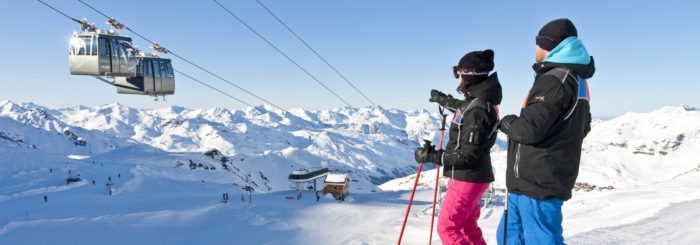
When it comes to winter wonderlands, the French Alps take the croquant biscuit.
They’re Europe’s largest mountain chain (extending for 1,000km) and cover a surface area of around 35,000km in France.
At 4810m, Mont Blanc is the highest peak, but as well as their glaciers and snow, the Northern and Southern Alps also have spruce and fir forests and a number of national parks and iconic lakes.
The varied terrain means that as well as world-class skiing and snowboarding, summer activities like hiking, mountain biking and white water rafting are also on offer and extend the appeal of this amazing area to visitors of diverse tastes.
Here’s some more information on France’s most stunning ski resorts.
Les Gets
Part of the Portes du Soleil Ski Area, Les Gets is linked to 11 other French and Swiss ski resorts and 600km of slopes that snake down from glaciers and across pastures and pine forests.
The best skiing is at the high-altitude Ranfoilly/Rosta section and at the picnic area of Les Nauchets you can enjoy panoramic views of the valley while enjoying a light snack.
Méribel is the central resort of the iconic Three Valleys ski area, which includes 15 summits above 2500m and six glaciers.
At 2952m, the Mont Vallon is the highest skiing point in this area and it offers a mind-blowing view of the Grand Cass and Gébrolaz Glacier as you sweep down the 1000m drop on one of the world’s prettiest pistes.
But as well as the majestic mountain scenery, this resort is also famous for architecture which retains the authentic Alpine chalet style but updates it to meet the demands of the modern era.
Tip: book with Erna Low for Méribel ski holidays including accommodation, ski hire and more.
Val Thorens
Also part of the Three Valleys, super high-altitude Val Thorens is famous for peerless fresh powder and partying the night away at après-ski venues like La Folie Douce.
But you don’t even need to strap yourself to skis or a snowboard to see some of its best views. Take a hike along trails like the 2 Lacs Path which runs parallel with the Junior Space piste and takes you downhill past the Moraine chairlift station and along the ‘Combe de Thorens’ or alternatively, The Marine Path, which crosses Les Dalles ski run and along mountain ridges past the terrific frozen Tête Ronde Lake.
Tip: from the top of Cime de Caron you can see the Peclet Glacier, Mont Brequin, Mont Blanc and more.
As you can see, the Alps are blessed with an array of natural riches and even if you don’t ski or snowboard, there are many other ways to explore them all year round.
But whichever resort you choose, you can always expect a warm welcome in a chilly climate.
What’s your favourite French Alps resort? Let us know in the comments section.
The first time I visited Ireland, I fell in love. Not only did I fall in love with Ireland, I fell in love with TRAVEL. Traveling Ireland led me on the path to where I am now; living and working in New Zealand. There’s something about exploring the Emerald Isle that epitomises everything that’s awesome about travelling.
Ireland is the kind of place where it’s easy to meet the locals, get around and there’s always a freshly poured Guinness waiting for you at the end of each day.
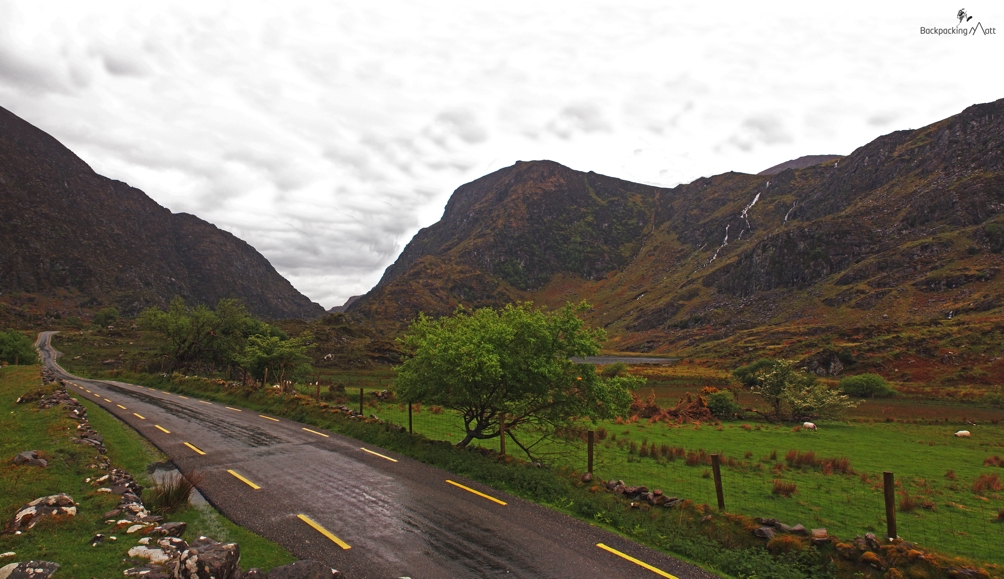
IrelandComments Off on A Trip to County Kerry’s Gap of Dunloe
In my recent trip to Ireland, I was reminded of a couple things about the Emerald Isle. The pubs in Ireland are fantastic, the weather often isn’t and the Irish are some of the kindest people in the world.
I have suffered from wanderlust ever since a teenager and at the tender age of 19, took myself off to Australia for a year. Various job roles in my 20s at LHR airport enabled me to satisfy my wanderlust, but it’s only in my 30s that I’ve started to look closer to home (the UK) and discover Europe.
I’m settled (for now), in the beautiful country of Greece.
Athens, as of late, thanks to the atrocious international reportage, conjures up images of rioting pensioners alongside hooded youths, baton wielding fascist policemen and you can almost smell the teargas and hear the cries of the people with raised fists. Yes, riots do occur – the Greeks are, luckily, not a nation to take things lightly and moan about things, yet do nothing about them.
However there is more to this capital city than what is portrayed of late.
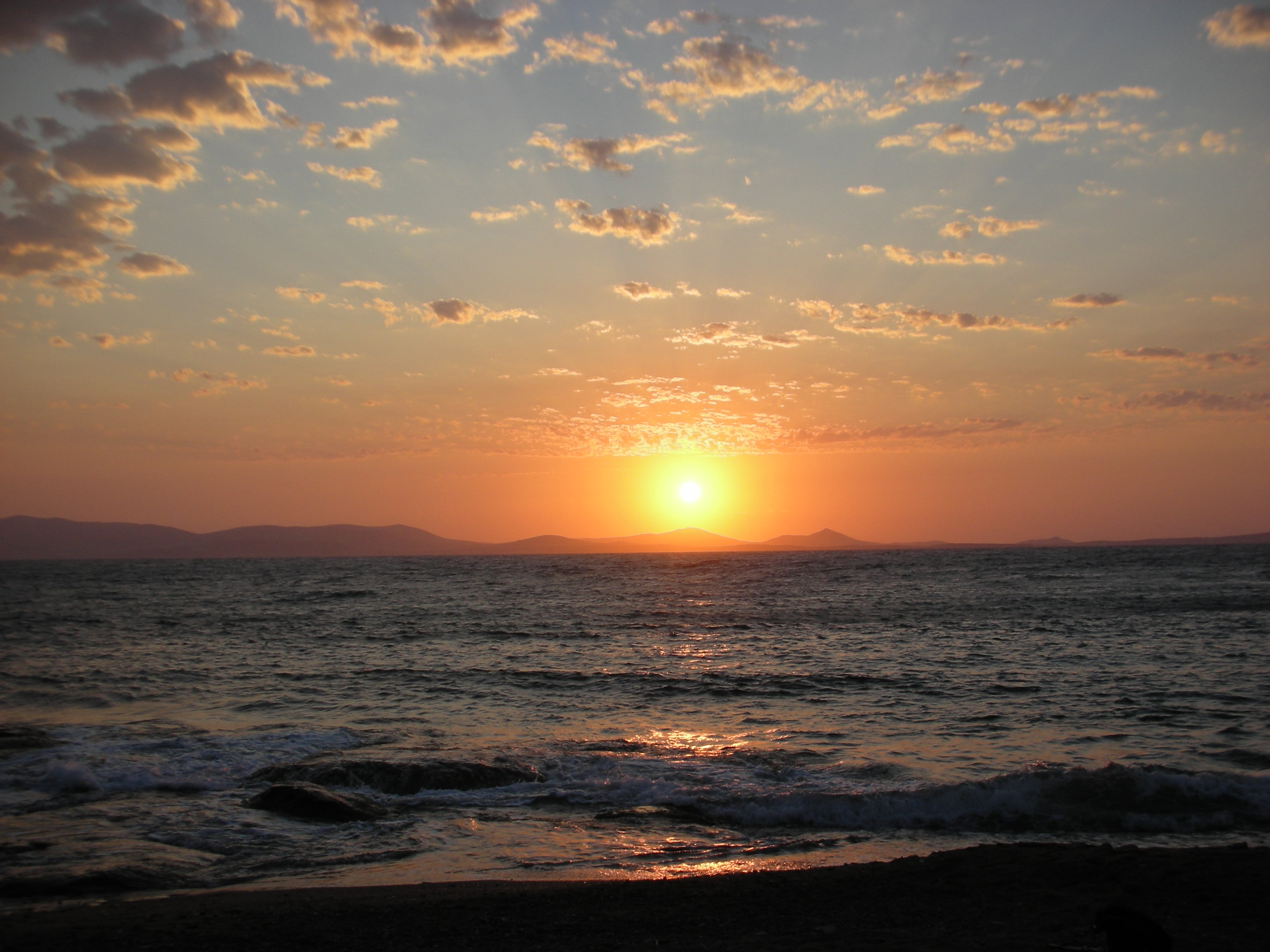
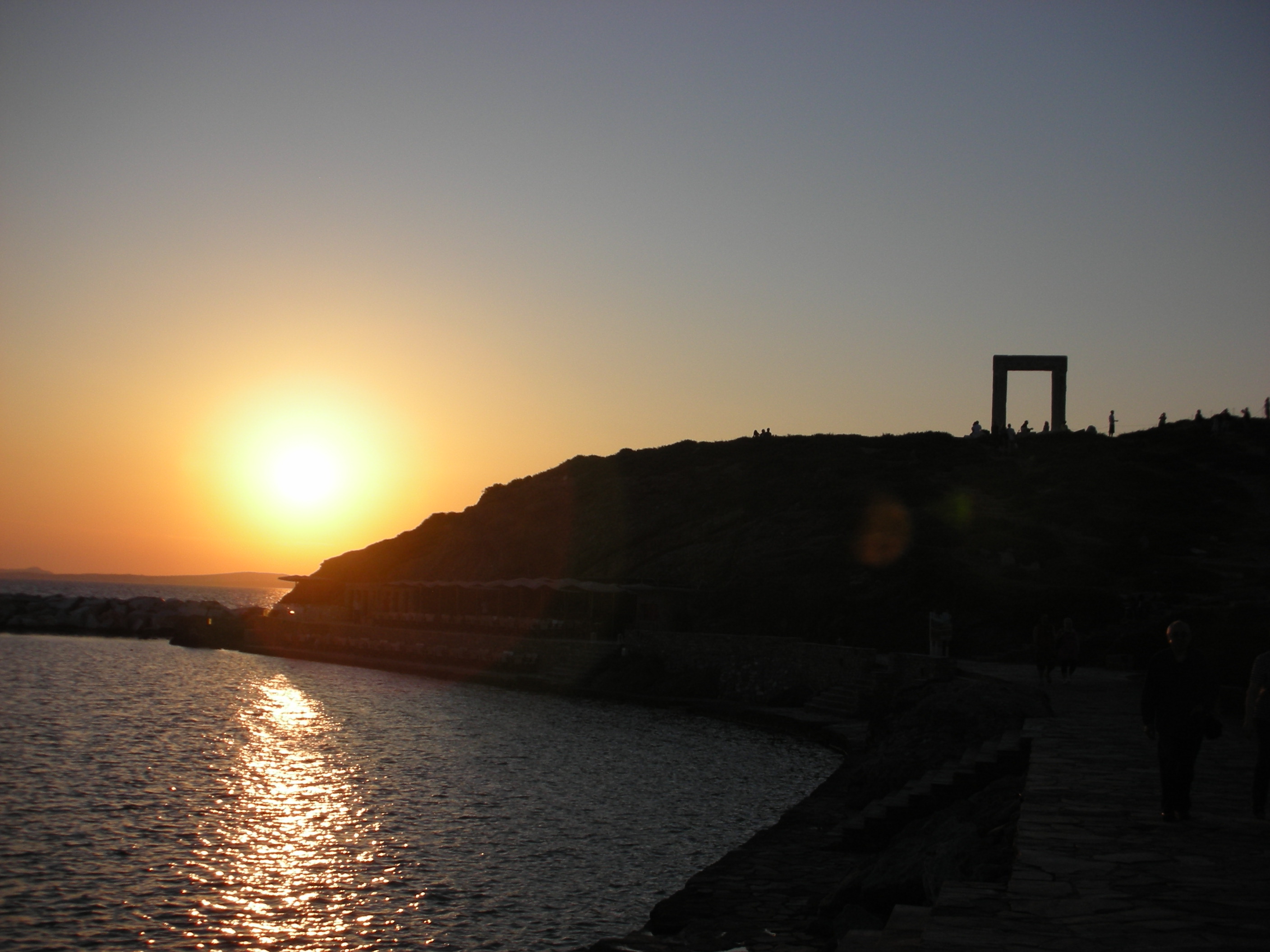
Sunset on Naxos
Picture, if you will: old Greek men, sitting outside various ‘cafénios’ in their neighbourhood discussing politics, twiddling their worry beads and looking at the young piece of ass that’s walking by (strangely, it’s never disgusting and never feels threatening).Hear the cries of the weekly neighbourhood farmer’s street market (bound to be one near your hostel) and be greeted in Greek by the stall holders – “Kali mera!” Smell the freshly ground Greek coffee from the cafés and know that you can comfortably sit there, nursing just one coffee for hours and not be asked to purchase another one or move on.
Eat Gyros, the incredibly healthy Greek fast food – chicken or pork and chips (fried in olive oil) wrapped in a pitta with salad and tzatziki (that yogurt, cucumber and garlic dip). If you’re incredibly lucky, you might even be spat on by an old Greek lady. Yes, this happened to me in my first week in Greece – I picked up an old lady’s shopping she had dropped on the floor. She thanked me, looked at me then promptly spat at me three times (well, on the floor in front of me to be fair). It’s a compliment to any woman – it means you are considered a beautiful person and they are warding away the ‘Evil Eye’ – lest someone become jealous of you and place a curse on you.
Sit outside in the summer and watch a movie with the backdrop of the Acropolis – this turns an average cinema trip into something of an experience.
And so, with an obvious passion for “all things Greek,” here are seven tips for your experience traveling in Athens.
1) Alternative tour around Athens
Exarchia graffiti (translation – The Revolution is Coming)
Don’t just come to Athens, see the Acropolis, changing of the guard then head to an island. Why not take yourself off to Exarchia, traditionally known as the ‘anarchist’ area of Athens. Full of great graffiti and very trendy bars and cafés, Exarchia is THE place to be.
Nearest metro: Omonia (red or green line) – about a 10 minute walk down the side alleys.
2) Athens Flea Market
Every Sunday in Monestiraki, the outdoor flea market opens up. Wander around and browse at the weird paraphernalia: anything from army gear, old dial telephones to coins, books and vintage clothing.
Nearest metro: Monesteraki (green line).
3) Head to Piraeus port, take the next ferry out of there
Sunset – Naxos Harbour
Don’t plan it – do as I do…rock up, take the next ferry and see where you end up. I have ended up on: Poros, Naxos, Paros and Aegina. Poros and Aegina are nearer to Athens and are served by high speed catamarans, therefore more expensive. But it is possible to get a ‘slow boat’ there.
Naxos & Paros are about 5 hours away by normal ferry. At both beautiful islands, guesthouse owners meet you off the ferry and bargain away. In the high season of August in Naxos I managed to bag a room for 30 Euros a night. Between two of us (15E each), that’s pretty good.
4) Visit The Art Foundation .. and have a beer
Located behind a small wooden door down another side street in Monestiraki, The Art Foundation bar is situated in the garden of an old, run down art deco building. Open till very late, it’s popular with the arty crowds. Enjoy a drink whilst browsing the strange exhibits in the upstairs rooms.
Nearest metro: Monesteraki (green line).
5) Epidaurus Ancient Theatre
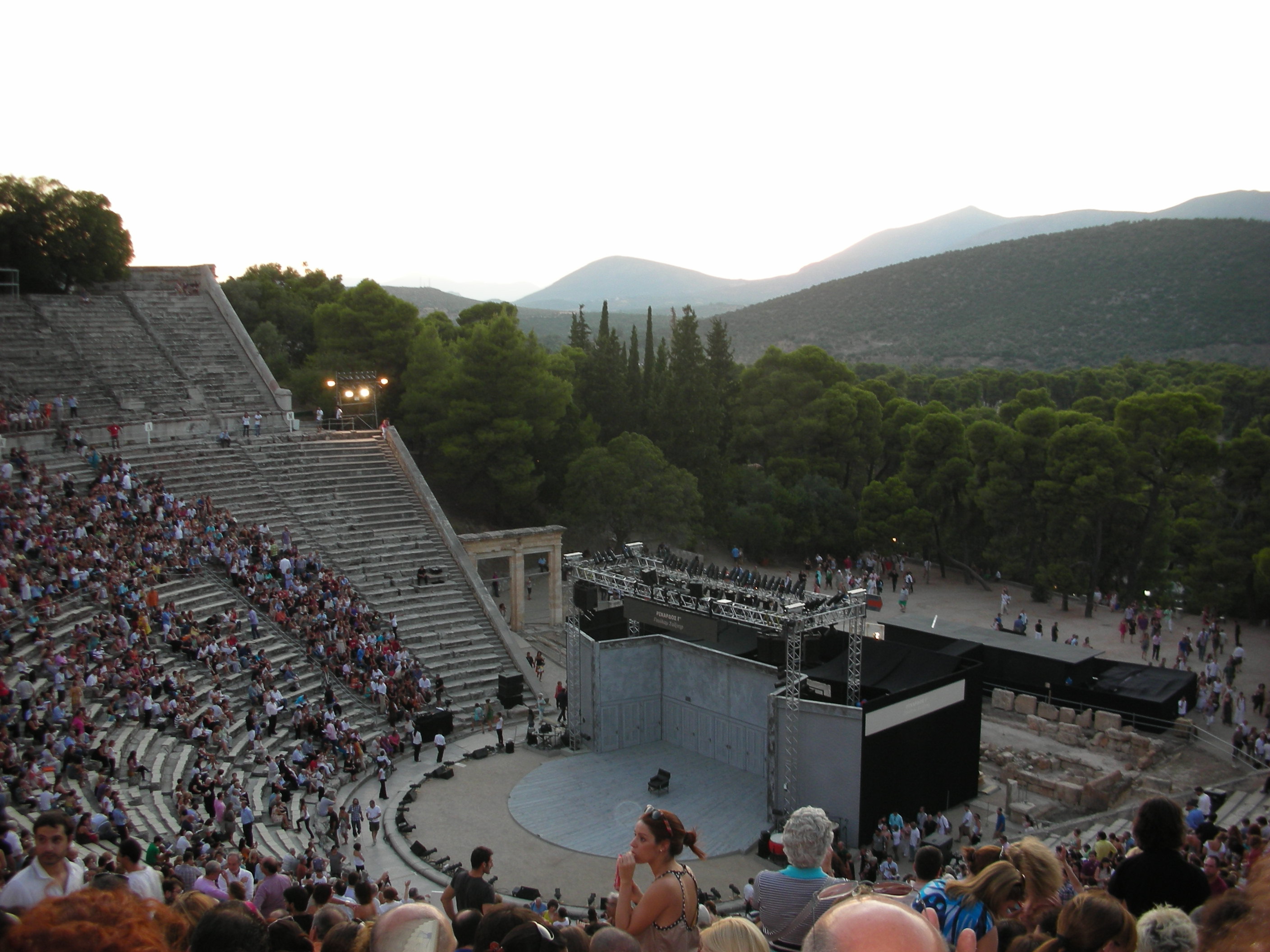
Epidaurus Ancient Theatre
Located in the Peloponnese, approximately 2 hours by coach from Athens, Epidaurus stages theatrical performances every year in the summer in an ancient amphitheatre. In July 2011 I was lucky enough to watch Kevin Spacey perform in “Richard III” as part of the Athens Festival – for 20E! The acoustics are spectacular so regardless of where you sit, you can hear every word uttered.
Take a coach from Athens – on performance days’ special coaches run for only 20 Euros. And if going on a performance day, please take a cushion!
6) Watch a movie in the summer, outdoors
Athenians are avid cinema goers. In the summer, the outdoor cinemas throw open their doors (or roofs) and a whole new experience in cinema begins. My favourite is Cine Paris – located near the Acropolis (speaking of Paris, here’s a great resource for taxi paris airport). You can have your own view of the Parthenon whilst you watch the latest movie – or sometimes even an old black and white Hepburn flick.
Nearest metro: Acropolis (Red line)
7) And one further afield – the Monasteries of Meteora
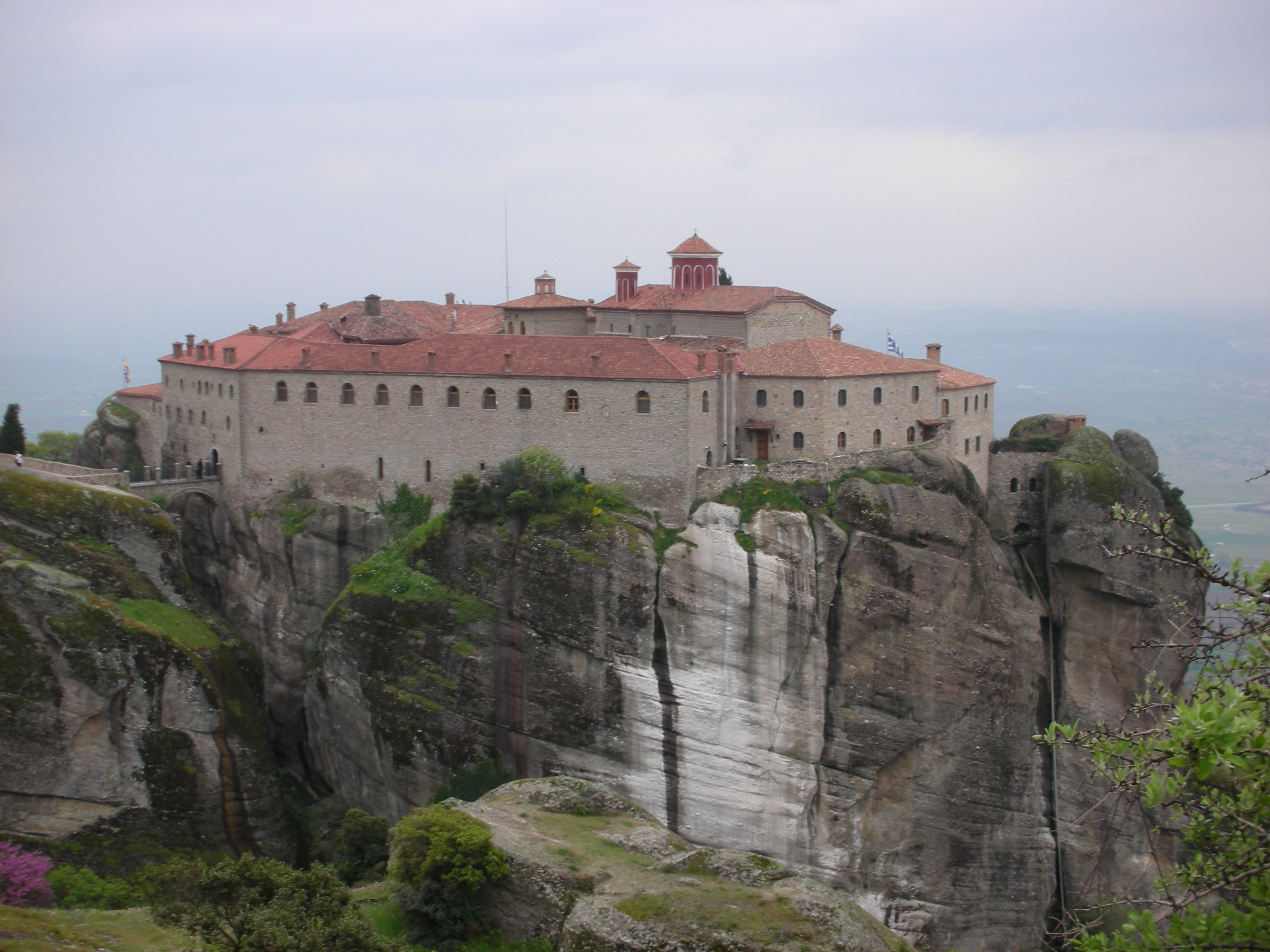
Monastry in Meteora
A World Heritage site (and used many years ago in the filming of a Sean Connery “James Bond” movie), Meteora is located in Central Greece. Translating as “suspended in the air” or “in the heavens above,” here you will find the 6 monasteries built from the 14th Century onwards atop the high rock formations.
Nearest station: Kalampaka – take the train from Larissa Station in Athens, approximately 4 hours journey time.
Yes, Greece is suffering big time at the moment – but she has so much to offer a person, so long as you are willing to open yourself up to her strange customs and are willing to integrate. Don’t just come here and be a backpacker – really try to get into the community and appreciate all this country has to offer. Don’t always believe all you hear on the news.
Have you traveled to Athens? Leave any tips in the comments section below.
This is a guest post by Sarah Gonski – contact me if you’re interested in writing for Backpackingmatt.com.
Pizza is to Naples what the cheese steak is to Philadelphia:
Homegrown and perfect; the pride and joy of the culinary scene.
When I was on a short backpacking jaunt through Italy a few weeks ago, I arrived in Naples with one goal in mind: eat pizza.
Scratch that, I had two goals in mind, and the second was: don’t get killed by the Mafia, knocked over by screaming Vespas or get my wallet stolen before I finish eating said pizza.
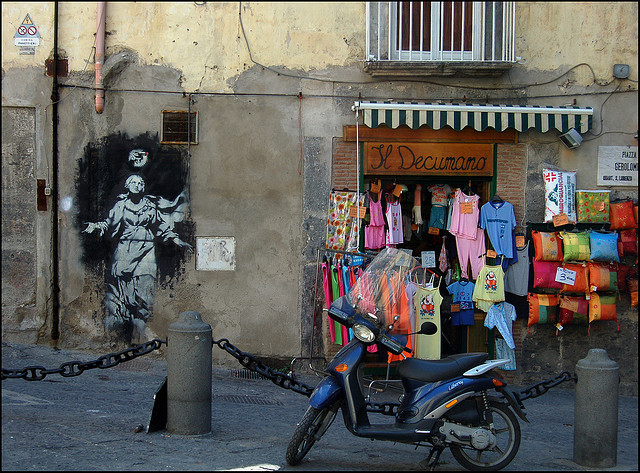
Naples, Italy (Creative Commons: Daveness_98)
That might be more than two goals, but forgive me, I wasn’t a math major. The first goal was easy to achieve. I’m not going to sugarcoat it, the others were tougher.
Before I arrived in Naples, I’d done my homework: the most-mentioned pizza joint in the city is the famed L’Antica Pizzeria da Michele, which has been a family business for 141 years now and counting. A longtime local favorite, recently it’s gotten a lot of attention from the international crowd as the site of Elizabeth Gilbert’s (and Julia Robert’s) famed pizza-gasm in Eat, Pray, Love.
The contender for second place is L’Antica Pizzeria e Friggitoria di Matteo, otherwise known as Di Matteo, just a ten-minute walk through the crowded Naples historic district. In business since 1936, it’s hardly a newbie on the scene, and has some dedicated fans of its own.
The mission was clear — consume Da Michele’s pizza. Consume Di Matteo’s pizza. Compare. Contrast. Repeat as necessary.
We went to Pizzeria da Michele on a cold windy night, and spent about 30 minutes waiting in the line that was forming outside. Nearly everyone in the line was Italian – the first good sign.
Da Michele Pizza – Naples, Italy
If the locals are lining up in a town where you can buy pizza about every ten yards, then this was the place I wanted to be.
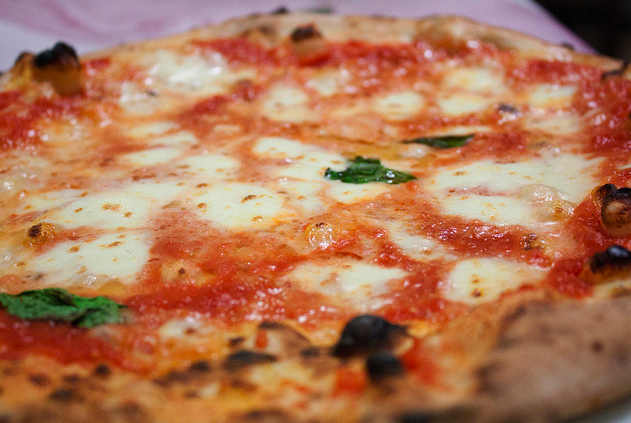
The place is fairly small, and no frills. The seating is family-style, so there are no private tables, which somehow feels right in extroverted Italy. The menus are single-page printouts hung in 8×10 frames on the walls next to each table. It’s clean and simple because there are only two offerings: Pizza Margherita (sauce, mozzarella and basil) or Pizza Marinara (no cheese).
It was perfect. The crust was chewy on the outside, rolled thin in the middle to let the sauce take center stage. The sauce was delicate and seasoned with a light touch, much thinner and lighter in color than pizza sauces usually are, and it tasted like fresh tomatoes. The cheese was slightly smoky and perfectly melted.
The whole effect was divine.
Hard to top, but we tried anyway. The next stop was Di Matteo for lunch the next day. Again there was a line outside, with only Italian being spoken – good news.
Di Matteo Pizza – Naples
The interior is small, but has an upstairs that the waiters send food to using an old-fashioned pulley system, which undeniably adds both charm and excitement (What if the rope breaks? Can I buy the pizza that falls off at a discount?).
The pizza came in good time, and boy was it good. The crust was thinner and slightly crispier than Da Michele’s, the sauce more robust, with a more intense flavor. The cheese was slightly firmer than the gooey Da Michele version, and the pizza had slightly less of the smoky flavor from the brick ovens.
The case to be made for each:
Da Michele: I like the whole limited-menu thing. It takes cojones to know that your food item is so good that no one needs to even think about ordering something else. The pizza was outrageously delicious. Waiting in line isn’t ideal though, and it seemed that there was always a line.
Di Matteo: More menu options, including a deep fried pizza that’s totally worth the heart attack. They also have private tables, so you don’t have to sit with strangers, which could be a plus or a minus depending on your tastes.
The verdict: I am a Da Michele girl. The best pizza I’ve ever tasted in my life, hands down. It was so good I went back the next day for more.
The second verdict: You can’t go wrong at Di Matteo’s, either.
About the Author: Sarah Gonski writes at Love & Paella about falling in love with the world in general and the south of Spain in particular. She enjoys 80s music, her beloved camera La Rebel, and conjugating Spanish verbs with The Mister. Her cherry chapstick has accompanied her to 24 countries and counting (don’t worry, it wasn’t the same tube).
Kia Ora - I'm Matt. Adventurer, Instagrammer and New Zealand travel planning expert living in Queenstown, NZ. Founder of Planit NZ - New Zealand's largest travel planning & booking website.
Hello! I’m Matt. Thanks for checking out my blog. Be sure to follow me on Instagram for loads more New Zealand travel inspiration. Comment on one of my photos so I know you came from here!
This error message is only visible to WordPress admins
Error: There is no connected account for the user 1660330 Feed will not update.




 Backpacking Matt