When I first decided to come backpacking in New Zealand, I never expected to find a temporary home in the Land of the Long White Cloud. New Zealand seemingly has this effect on many – especially my current home of Queenstown. This bustling little resort town tucked into the Southern Alps seems to be home to more Irish, British, Canadians and Aussies than it does Kiwis.
Many visitors to Queenstown would quickly seem to understand why so many backpackers and those on working holidays in New Zealand seem to never leave. Queenstown is hands down one of the most beautiful places in New Zealand – which is without a doubt one of the most beautiful places in the world.
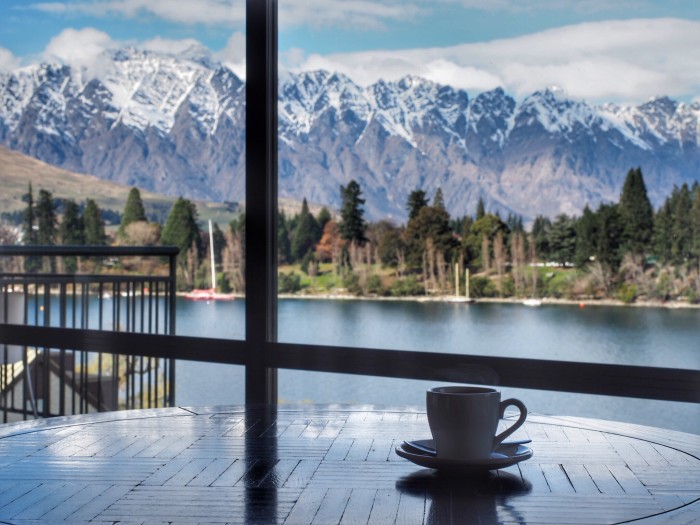
The stunning views and jaw dropping vistas that surround Queenstown are surely part of the draw, but it’s only those that really settle down in QT that get it. Yes, the views that surround Queenstown – the sunsets across Lake Wakatipu, the snow capped Remarkables Mountain Range, the tempting summits of Cecil and Walter Peak – those views are absolutely part of the appeal.
Yet for me – and I believe many others – it’s both what lies beyond those views and what those views open up that are the real draw to living here in this far away corner of the world.
It’s the evening runs, the weekend missions into the backcountry, the hikes, the climbs, the casual community races, the epic mountain bike adventures and the overall outdoor focused, adventure influenced and healthy lifestyle that become an influential part of life in Queenstown. It’s that lifestyle that draws so many in and holds them here for much longer than they anticipated.
To get a taste of this lifestyle, you need not look any further than a climb up Ben Lomond just outside Queenstown. This 1,748 metre summit is literally accessed directly from town.
This view comes just after passing the Skyline complex at the top of the gondola. If you’re keen to save about an hours worth of hiking through the forest, you can take the Skyline Gondola up through the Ben Lomond Forest for about $15.
After about an hour views of Lake Wakatipu and Cecil and Walter Peak will open up behind you.
Looking south towards the Remarkables.
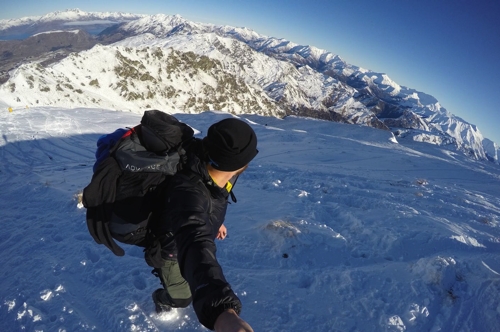
The hike to Ben Lomond’s summit should not be tackled during the winter unless you’re prepared for ice, snow and alpine climbing.
These photos are somewhat deceiving as the ridgeline was essentially snowless all the way to the summit.
After about two hours of hiking you’ll reach the Ben Lomond Saddle with views opening up into Skippers and Shotover Canyons. From here you can carry on to the summit in about an hour or drop down through alpine tussock into farmland and onto the Moonlight Track which will lead you to Arthurs Point. It’s a solid three hours to Arthurs Point and from here you’ll have to hitch back to Queenstown unless you’ve arranged transport.
The photo above shows the ridgeline you follow to the summit.
Looking north towards Mount Earnslaw…
View of Moke Lake and the mountains beyond…
Expect a return trip from Queenstown to take no less than five hours.
Have you climbed Ben Lomond? Can you suggest any other hikes around Queenstown? Let us know in the comments section below.
25 September 2011
Twelve months ago, I hopped on a borrowed bike with essentially zero training and rode in the Rail Trail Classic 100 – a 100 mile (150 km) bike race across Central Otago on New Zealand’s South Island.
Most cycle tourists in New Zealand tackle the Otago Rail Trail over the course of three or four days. While the cycling adds to the enjoyment, the main draw of a trip on the Rail Trail involves numerous mid-ride coffees, afternoon pints and evening pub meals. The surrounding scenery is stunning, but as the trail originally was the path of a train track, the gradient is very gradual and the riding isn’t necessarily exciting.
Over the past year I’ve clocked hundreds of miles on my mountain bike on trails throughout New Zealand and decided I would again set off to tackle the RTC100. I was determined to prove that not only could I complete this marathon of bike races, but I hoped to significantly improve my time.
New Zealand’s Spring weather is well known for throwing four seasons your way over the course of a day. The past week has been highlighted by stunningly warm Spring days, but alas before today’s ride Mother Nature sent a Spring Storm our way.
The result?
In some bizarre way, I enjoyed it. I was glad to improve my time by just over an hour and a half, but equally thrilled to simply complete this epic race. The sense of accomplishment you feel after completing such a massive challenge is impossible to put into words.
Check out this video from the ride…
19 July 2011
Most months throughout the year, the highlight of a trip to Queenstown is centered around hiking Great Walks like the Routeburn track, jumping off bridges, out of planes or barreling down rivers in New Zealand-invented jet boats.
See, the thing with Queenstown – as compared with most Northern Hemisphere ski towns – is that it very, very rarely snows in town.
The village sits on the shores of Lake Wakatipu at just about 340 meters above sea level. All but two or three times throughout the winter, this isn’t high enough for precipitation to fall as snow.
The New Zealand skiing and snowboarding experience is characterized by trips from town ‘up the hill’ to the ski fields. Forget ski-in ski-out like you’d find in a Colorado mountain town. At the very best, a trip to one of the ski fields near Queenstown will take you 30 minutes – this is assuming:
While the 30 minute trip to the mountain is tough to get used at first, the trip up from Queenstown to one of the ski fields is a pretty epic experience. Twisting mountain roads, steep drop-offs and stunning views back over Lake Wakatipu and Queenstown are on offer all the way up to The Remarkables or Coronet Peak. And surprisingly … the snowboarding is pretty bloody good.
Later on in the winter, I’ll put together a post with some practical tips for your experience snowboarding on New Zealand’s South Island – for the time being, enjoy these photos from The Remarkables and Coronoet Peak just outside of beautiful Queenstown.
This photo was taken early one morning as the sun was just rising at Coronet Peak. The clouds cleared to reveal a Wakatipu Basin completely covered in snow – a once or twice a year event in Queenstown.
After a solid week of snow, a high pressure system rolled across the South Island and we’ve been granted bluebird clear days.
When the clouds do roll in, you’re very very often above them – a surreal experience. Driving up The Remarks recently, it looked as if it was going to be a cloudy day – until we broke through the clouds and were greeted with clear blue skies.
This might possibly be the most spectacular view I’ve seen anywhere in New Zealand … or for that matter the world.
After riding the Shadow Basin chair at The Remarkables ski field, a thirty minute hike up to the ridgeline of The Remarkables moutain range leaves you with this this view.
Have you been skiing or snowboarding in Queenstown? Leave your experiences in the comments section below.
23 June 2011
Most travelers who come to Queenstown stop after taking in the staples of this epic little resort town on New Zealand’s South Island.
Bungy jumping. Check. Jetboating. Check. Skydiving. Check.
While these activities (and more) are on offer in the Adventure Capital of the World, the shining light in Queenstown is the huge variety of hiking, biking and simply stunning scenery that sits literally on little Queenie’s doorstep. While you’ll get a taste of what this area of the world has to offer when you hop on the cramped bus to Milford Sound (and you should), to really understand Queenstowns natural beauty, you’ve got to check out some of the exceptional nearby hikes (and bike rides) which are begging to be explored.
In the past six months, I’ve developed a passion for taking in and really experiencing everything the Southern Lakes of New Zealand has to offer.
There are a couple of fantastic hikes which leave from Queenstowns central Shotover Street. Head up through the Ben Lomond forest, past the AJ Hackett Ledge Bungy site, and head back to towering Ben Lomond. For something less strenuous, check out the hike up to the Queenstown Hill; both afford priceless views of Lake Wakatipu, Cecil Peak and the aptly named Remarkables.
The opportunities for exploration are opened wider if you have your own transportation. If you’ll be in Aotearoa for awhile, consider buying a campervan when you arrive; otherwise, one of the best ways to travel around New Zealand is with your own transportation so hire a car. When you get to Queenstown, head down towards Glenorchy and climb Mount Alfred.
This 1,375 metre peak juts out between the Dart and Rees River valleys and simply begs to be climbed. Natureshop.co.nz recently offered me some hiking gear to sample and I tackled Mount Alfred for the second time with my flatmate Jo, a pair of Keen hiking boots, and a Merino Icebreaker midlayer. Excellent gear for what might just be one of the best day hikes in the greater Queenstown area.
The hike begins from the western side of Mount Alfred in the Dart River valley; follow signposts to the start of the Routeburn Track and you’ll see the carpark where the track begins about 20 kms from quaint Glenorchy.
As usual, DOC (the Department of Conservation) overshoots the realistic time it would take for someone of a reasonable fitness to hike the track; while my flatmate and I managed to do the hike in under four hours, this included a fair bit of running on the decent. Basic hiking should have you to Alfred’s nearly 1,400 metre summit and back in a cool 5 – 6 hours.
Even those with a minor affliction to vertigo should be able to handle the scrambling that is a welcomed break-up to the half day adventure.
The first two hours is spent climbing through ancient, moss covered, silver beech forest which is prevalent throughout this area of New Zealand. New Zealand’s largest remaining indigenous forest will keep you company as you climb 600 or 700 metres above the valley on a well defined trail.
I tackled Mount Alfred with these Keen Targhee Mid II hiking boots. They were excellent for the hike with a 4mm sole that provided a solid bit of traction over the slippery roots, rocks and leaf covered trail. While a more rigid boot might have been beneficial, I enjoyed the flexibility that these boots provided. Solid enough to provide some ankle support going up; yet flexible enough to do a bit of a trail running coming down.
About two hours into the climb, you eventually reach the bush line where the beech forest ends and the tussock begins.
While the trail isn’t marked from this point on, there are a couple obvious routes that will take you the the plateaued summit. Vere slightly left and an easy scramble will take about 30 minutes to find the top.
The final scramble to the top is an absolute rush; especially with the cold wind whipping off the valley – it’s a fantastic feeling to finally pull yourself up onto the summit. The 360 degree views are quite simply stunning.
While there was a bitterly cold gale at the summit, the Icebreaker mid layer (made from New Zealand wool) provided a great insulation from the bone-chilling cold.
After popping up to the plateaued summit, you can spend time wandering around and taking the views of Lake Wakatipu, the Dart & Rees Valleys, the Humbolts (if the weather is clear!) and majestic Mt Earnslaw.
Have you been to Queenstown? Add your favorite nearby hikes in the comments section below.
Considering hiking Mount Alfred? Feel free to contact me with questions.
The Natureshop provided me with complimentary gear for this hike but the opinions here are entirely my own; for ‘nature’ inspired products that are friendly to your body and the environment, check out Natureshop.co.nz.
Continue reading...
16 June 2011
Today’s Friday Travel Photo was submitted by Amanda (@DangerousBiz) of A Dangerous Business.
I know of few people that share the same level of appreciation I have for Aotearoa – yet Amanda is one of them. I was lucky enough to meet her last month while she was backpacking in New Zealand as a guest of Blog4NZ (a campaign to tell the world that New Zealand is in fact open for business despite the recent earthquakes in Christchurch). It was fantastic to meet a fellow American, travel blogger and lover of New Zealand as she was reunited with the Land of the Long White Cloud.
Follow her journey and get more New Zealand backpacking advice on her travel blog, Dangerous-Business.com.
I love this country because, one minute you can be wearing your sunglasses, taking photos of beautiful Lake Hawea. The next, you may see a rainbow plunging into the depths of the dark water.
And then the next you could be caught in an all-out downpour that comes out of nowhere, leaving everything rain-kissed and beautiful.
Do you have a photo(s) and travel tips you’d like featured on Backpackingmatt.com? Email me at matt (at) backpackingmatt (dot) com.12 April 2011
The Land of the Long White Cloud is a destination well worn onto the backpacker trail. And for all the right reasons. An epic combination of stunning scenery, adventure sports, and friendly locals combine to make one hell of a place to travel to.
Not only is New Zealand beautiful, New Zealand is easy to travel around. In fact, New Zealand is arguably one of the most backpacker or independent budget traveler friendly countries in the world.
New Zealand is addictive. Trust me. I originally came for a 12 month working holiday, yet 18 months later, I’m still here.
So you’re considering a trip backpacking in New Zealand? Sweet as (as they say). While New Zealand is welcoming and easy to get around, you might have some questions about your trip here.
Consider these,
Almost daily I get emails from backpackers planning their trip to New Zealand. One of the most common questions I get is:
Should I start on the North Island or the South Island?
While the North Island is stunning (be sure to check out the Bay of Islands and definitely don’t miss the chilled out Coromandel Region), the South Island is where it’s at. As it will be the highlight of your trip, it’s the logical place to finish.
The mountains are taller, the drives are more spectacular, the Great Walks are greater, and the beer is better so finish on New Zealand’s South Island.
There is no shortage of budget accommodation throughout New Zealand. From hostels, to budget motels to holiday parks with self contained accommodation, you won’t have a problem finding a place to lay your head at night.
As New Zealand is frequented by thousands of young backpackers each year, the big chain hostels are present throughout the North and South Islands. Many of the major backpacking destinations have Nomads or Base Backpacker cattle yards.
While many of these are adequate – and some quite flash (I’m talking about you Nomads Queenstown) – there are heaps of character filled, independently owned hostels that will compliment your trip to this small island nation.
Check out the BBH backpackers (Budget Backpacker Hostels) and get to know their quirky owners, settle down with a glass of New Zealand wine next to their wood burners, or listen to the sea from their gardens.
For $50 you can get a BBH card and save $3/night at hostels throughout New Zealand.
Chances are your flight to New Zealand will arrive in Auckland – this characterless city of the North Island will (unfortunately) be your welcome to Aotearoa.
The Airbus Express will be your best choice for the quick, 45 minute trip to the Auckland CBD. Tickets are only $23 round trip and can be booked online so you’re set to go when you land.
Consider these Auckland budget travel tips for your first couple days in the city – and most importantly, don’t stay too long – there is too much to see outside of NZ’s largest city.
New Zealand absolutely begs to be explored behind the steering wheel of your very own campervan.
You won’t realize how many of these converted, backpacker-filled vans flock New Zealand’s roads until you’re here yourself. If falling asleep to the sound of the surf and waking to the sunrise sounds appealing to you, then a campervan just might be the right mode of transportation for trip.
Many backpackers in New Zealand buy a van when they arrive and sell it prior to their departure. Surprisingly, buying a campervan in New Zealand is a simple and straightforward process; however, do be aware that a certain amount of risk is involved and not all of the campvervans in New Zealand are good investment.
If you don’t do your research properly, your van could explode just outside of Queenstown after doing a solid 430,000+ kilometers.
Assuming you’re not comfortable taking on the risk of buying a campevan, at the very least hire one for the duration of your stay.
Freedom camping is possible in many areas around New Zealand and you can save a significant amount on accommodation when you consider a shared dorm is often $30 per night.
In areas where freedom camping is not allowing, the Department of Conservation runs basic campsites that are as little as $5/night.
If you’re traveling with an unlocked mobile, you’ll be able to pick up a sim card when you get into New Zealand. While there are a couple different providers to choose from, your best bet is undoubtedly 2Degrees.
They offer cheap, international calls back home to Mom & Dad as well as cheap calls throughout New Zealand – for $19 you can get 30 minutes of talk time, 2000 texts, and for you iPhone users – 50MB of data.
New Zealand is an adrenaline junkies’ paradise. If you can dream it, chances are you can do it in New Zealand.
You can jump off bridges or out of planes. You can roll down hills in giant, water filled balls. You can run off cliffs with parachutes strapped to your back. You can cruise down rivers narrowly missing canyon walls in a jet boat. Or you can go black water rafting deep below the earth’s surface. Really, you can do it all.
AJ Hackett established the world’s first permanent, commercial bungy jumping operation in Queenstown in 1982. Today, there are three in Queenstown alone for you to choose from (K Bridge, Nevis Highwire Bungy, & The Ledge Bungy).
It’s a terrifying experience – arguably, one of the most difficult things you’ll ever have to do, yet it’s an absolute rush and a must for your trip to New Zealand.
Planning a trip to New Zealand isn’t an easy process. In fact, it’s bloody difficult. Why?
To be honest, you probably can’t. Unless you’re committing two or three months to New Zealand, it’s impossible to see it all in one go. The biggest mistake you can make when coming to New Zealand is attempting to do too much in too little time.
You’ll enjoy your experience backpacking in New Zealand heaps more if you have time to relax and spend a little longer in those untouched little corners of New Zealand you’ll inevitably find.
A road trip around New Zealand will reveal a country considerably untouched by the human hand. Sure, tourism is big business in many of New Zealand’s destinations, yet a huge part of the country is as remote and untouched as it is stunning.
There are a series of multi-day Great Walks throughout New Zealand and you should experience at least part of one on your trip here. Check out the Routeburn Track near Queenstown, the Abel Tasman Coastal Track near Nelson, or one of the other seven Great Walks.
If you’ll be staying in New Zealand for more than a couple weeks, you might want to consider WWOOFING (Willing Workers On Organic Farms) for part of your trip.
It’s a fantastic way to save some money, meet interesting local Kiwis, and get a feel for a different aspect of life in New Zealand. The majority of people swing through New Zealand, see the sites, jump off bridges and miss the small and out of the way places that make New Zealand so unique.
These Wwoofing experiences and tips are a great place to start if you’re considering this for part of your stay.
While most of these tips aren’t experience focused, walking on a glacier is one that undoubtedly deserves to make it on the list. New Zealand is filled with wonders, and you’ll find two on the West Coast of the South Island – the Franz Josef & Fox Glaciers.
These ancient pieces of ice start in the Southern Alps and stretch all the way to coastal, temperate rainforest only miles away from the sea at 300 metres above sea level.
The West Coast itself is a unique and fascinating area of New Zealand, so be sure to spend at least a couple days exploring the rugged coastline from Karamea all the way to Haast.
If you decide to buy a campervan, rent a vehicle, or get around by bus, you’ll be shocked at the number of hitchikers you see in New Zealand. It’s quite common and a very budget-friendly way to see New Zealand.
New Zealanders are a friendly lot and you’re bound to have some interesting chats once you do get picked up.
If you decided to give it a go (and you should), you’re best off on the outskirts of a town, and make sure there is room for the driver to pull over; if there isn’t, you won’t get picked up – it’s as simple as that. A smile never hurts and a sign saying where you want to go will probably speed up your chances of getting a lift.
As any travel blogger, Facebook addict, or general internet using backpacker that has come to New Zealand knows, the state of the internet here is dreadful.
Slowly, more and more cafes are offering free internet yet without a doubt New Zealand is far behind the rest of the world. Your best bet for finding free WiFi is at the local library with the other backpackers who have figured the system out.
Mountain biking in New Zealand is unsurpassed by few places in the world and Kiwis love their bikes about as much as they love “The Rugby.”
Hire a bike and spend the day exploring the miles (and miles) of single track trails in the Whakarewarewa Forest – chances are, you’ll want to go back for day two.
In a country where budget activities are few and far between, mountain biking is a fantastic way to spend a day and see the countryside (plus, you’ll burn off the calories from all those budget-saving meat pies you’ve been eating).
In a country the size of the state of Colorado, you have less than 4 million people, 40 million sheep and every possible landscape you could imagine.
There is so much to be seen that no guidebook (or blog post) will ever point you in all the right directions. Use this to your advantage, and seek out your own untouched areas of Aotearoa.
A highlight of your trip to the Land of the Long White Cloud should be getting off the beaten path and finding your own special corner of this idyllic part of the world.
Have you been backpacking in New Zealand? Leave your tips in the comments section below.
Continue reading...25 March 2011
A trip to New Zealand isn’t complete without taking in one of the many fantastic wineries scattered throughout the North & South Islands. This fantastic guest post nails out 5 must-see wineries for your trip to Aotearoa.
Recently New Zealand was shaken by the Canterbury earthquake but fear not, this Land of the Long White Cloud has not been stirred (apart from our world-class lees- stirred wines of course). Outside of Christchurch, New Zealand is very much open for business and is begging to be explored.
This compact island nation certainly fulfills the desire for a diverse, interesting and ultimately beautiful wine destination. New Zealand has seven recognized wine destinations. Not sure where to start? Check out these:
5 Wineries Not to Be Missed While Traveling in New Zealand.
A stunning winery and restaurant set on Waiheke Island in the Greater Auckland region. Reflecting the novel way of getting to this sub-tropical island paradise (that is, whether by the 40 minute ferry journey through the Auckland Harbour, or the 8 minute chopper ride), you will find this sub-regional wine-growing area is alive with enthusiasm for wine, food and laid-back culture.
The climate is so different to the mainland, and the Island is synonymous with a good day out. Cable Bay is one of the first stops on the Waiheke Island wine stop route, and well worth coinciding with lunch. With an emphasis on seafood, Cable Bay does go the extra mile with the lunch time crowd.
Often featuring a variety of sculptural artists on the brilliant winery lawn, there is a stimulating combination of culture, cuisine, scenery and wine.
With a hardly indigenous bronze elephant perched atop a mound of earth at the very coastal Te Awanga in Hawkes Bay, you have to begin wondering about the origins of this emerging, successful winery. German couple Reydan and Roger Weiss visited New Zealand in 2001 and simply fell in love with the Hawkes Bay area. Soon after they built the innovative, awe inspiring winery and restaurant in this special coastal milieu.
The award-winning wines produced by the Elephant Hill winemaking team, led by Steve Skinner is a great reason to take the trip out to this coastal sub-region of Hawkes Bay. Dining here is no bland experience either – beautifully executed cuisine with a dreamy ocean backdrop ensures indisputable inspiration.
Try the Elephant Hill Reserve Syrah, or the Viognier.
Based in the famous Gimblett Gravels, and home to the amiable John Hancock, Trinity Hill winery is somewhat of an icon in Hawkes Bay. The cellar door has a rustic feel to it, with a fascinating glimpse into the barrel hall through glass. The cellar door personnel are always friendly and knowledgeable, and you will frequently find John himself behind the counter or hosting guests in the cellar’s leather armchairs.
What’s most exciting is the opportunity to try some of Trinity Hill’s best wines, and if you’re lucky, purchase some stellar vintages.
Trinity Hill’s flagship wine is the Homage Syrah – this is something special. You’re bound to find some magic here.
This is not a single winery as such, rather a entire sub- region of Central Otago wine-growing country, and it is well worth a visit to delight in the wines, people and wineries scattered throughout this scenic area nuzzling the banks and hills above the Kawarau River.
To the west is nestled Central Otago’s famous Felton Road, along which numerous wineries are based, including the eponymous Felton Road winery. Renown for their high-end Pinot Noir, a stopover during their afternoon opening hours is recommended for an opportunity to taste some of Central Otago’s finest. If you’re lucky you may find some older vintages to lust upon, particularly Felton Road’s Riesling.
Across the road you will find two gorgeous women replete with good humour, compassion and charm. They are Dennie Downie and Jane Gill, and they are the proprietors behind the award-winning label, Desert Heart.
With stylish woolshed accommodation situated in amongst their vineyards, it’s a romantic spot for a getaway.
Home to one of New Zealand’s favourite open-air concert extravaganzas it’s not hard to see why Rippon, just 15 minutes out of Wanaka, is a media darling.
Arguably one of the most picturesque vineyard settings in the world, Rippon winery and vineyard is owned by Lois Mills, son Nick and his wife Jo Mills. Producing some fantastic Pinot Noir as you would expect in Central Otago, Rippon also does well in the Riesling variety, delivers a crowd-pleasing Sauvignon Blanc, Gewurztraminer and an interesting Osteiner, one of the only producers of this hybrid variety in the country.
Have you been to any New Zealand wineries? Leave your favorites in the comments section below.
About the Author: Lady Parker Wine Reviews brings you the best of New Zealand’s wine industry – the personalities, stories, and descriptions of the wonderful, unique qualities that lie in every bottle through entertaining and informative media. Vitally important to my mission is my philosophy of only reviewing wines that I would personally recommend, so you can rest assured that every wine reviewed has a mark of quality endorsement, and frequently they are standouts.
Firmly knowing that wine is my passion, I left my career as a barrister and solicitor to pursue the innovative vocation of wine writing and education. Growing up in the wine-growing regions of both Gisborne, and Central Otago, and from a family of wine, there’s no doubt it is an innate love! Currently I am embarking upon achieving my Master of Wine. Overall I aim to enlighten, inform and share with the wine-loving community the world over all the wonders and mysteries of wine.
Continue reading...6 March 2011
I was sitting at my desk in Queenstown – some 500 kms away from the Garden City of Christchurch – and as I looked out on our balcony overlooking The Remarkabes, I saw my mountain bike shake back and forth and the floor beneath my feet rolled as if I was riding the historic TSS Earnslaw across Lake Wakatipu.
The 6.3 earthquake that struck a mere 5 kms beneath the surface was felt as far away as Wellington on the North Island.
The Garden City will never be the same again and the events of February 22nd will go down in the history books as one of New Zealand’s saddest days.
The economy has surely taken a huge blow, yet New Zealand will continue to prosper and continued high tourism numbers will be key to a successful recovery.
Here are: 5 Reasons Why You Should Still Visit the Most Beautiful Country in the World
The images that have been broadcasted by the mainstream media throughout New Zealand and the world show a Christchurch that has been devastated. Without a doubt, this is true – estimates are as high as $15 Billion to rebuild the city.
While the City Centre will sadly never look the same and the Eastern suburbs are severely damaged, much of Christchurch remains essentially unaffected. I was driving into the city a week after the quake and it was very much normal days until just blocks before the City Centre.
The Garden City probably won’t be open to the general tourist for some time, but it’s crucial to realize the small area affected when considering the rest of New Zealand that is begging to be explored.
One of the most popular New Zealand itineraries begins in Auckland and ends in Christchurch. For those that are just traveling the South Island, about 90% arrive and depart from Christchurch.
Clearly, the Garden City is a crucial entry and exit point for the traveler to New Zealand.
While you probably won’t spend much time in the city itself, it’s worth noting that the Christchurch airport is fully operational and getting in and out of the South Island is just as easy as it ever has been.
New Zealand needs you almost as much as Canterbury needs you. You shouldn’t wipe New Zealand from your travel plans and you most certainly should spend time in the stunning Canterbury Region.
The cultured can sip world-class wine, the adrenaline junkies can bungy jump in Hanmer Springs or experience epic mountain biking on the St James Cycle Trail, and trampers can take in the alpine glacial lakes at the base of Aoraki Mt Cook.
Don’t skip Canterbury. Why? The businesses here need you and you’ll miss out on some truly unique New Zealand experiences.
Nowhere else in the world does the laid back, no worries outlook on life permeate all aspects of society like it does in New Zealand. It’s an addictive aspect of this country and New Zealanders themselves are reason enough you should still visit Aotearoa.
Canterburians had spent the past six months rebuilding their city after the September 4th earthquake that badly damaged Christchurch.
The February 22nd quake has essentially made all that work for naught, yet again volunteers from throughout New Zealand have flooded the city ready to help. Money, food, and other support has come to Christchurch from all over New Zealand – from Cape Reinga to Bluff.
You should travel to New Zealand to experience this ‘no worries’ culture, while at the same time doing your part to ensure the whole of New Zealand recovers from the devastating quake.
New Zealand is quite simply one of the most beautiful and diverse countries in the world (Not convinced? Check out 20 of New Zealand’s Most Best Views).
You should still travel to New Zealand as there is so much to be seen outside of Christchurch. A typical trip to New Zealand would typically entail two or three days in the Garden City, so don’t miss out on the trip of a lifetime simply because one city is out of commission.
What’s your take? Have you traveled New Zealand? Leave your best experiences from Aotearoa in the comments section below.
Continue reading...30 September 2010
Since arriving to New Zealand just over ten months ago, I’ve published loads of destination specific New Zealand backpacking advice. I still have plenty of New Zealand experiences and advice to share – yet often I find this is a country that is best described through a photo.
It’s a great place for aspiring photographers. Why? Almost every direction you turn, every road you drive down, and every new destination you visit, you’re greeted with a stunning vista, a snow capped mountain, a rugged beach, or vast expanses of green rolling hills.
It’s a pretty great place to take pictures.
Below you’ll find 20 of my favorite New Zealand views.
Raglan is an epic little surf town found about 90 minutes south of Auckland. It’s home to the world’s largest left hand break and has a great bohemian feel. Raglan is a town where you can go to the supermarket, pub, or cafe barefoot and not one person will judge you.
Campervans are easy to buy and a cheap and efficient way to get around New Zealand. I’ve found that some of my favorite memories in Aotearoa come from the time I spent cruising around NZ in my now deceased 1986 Toyota Hiace, Max.
If you have any interest in throwing yourself off a bridge or out of a plane, then New Zealnd is the place for you. Pictured above is the Taupo Bungy which is the home of New Zealand’s highest water-touch bungy. Why wouldn’t you want to touch the water after jumping from 47 meters?
There are no shortage of sheep in New Zealand (we’re talking over 30 million), so don’t be surprised if you find yourself dealing with the odd road block of sheep.
To get from the North to the South Island of New Zealand, you’ll have to cross the Cook Strait. Your budget-friendly option is crossing the strait with Interislander. The crossing is billed as one of the most beautiful ferry rides in the world – you’ll understand why on a clear day.
New Zealand is home to some excellent wines – specifically the Sauvignon Blancs of the Marlborough Region. There is no better way to take in this region than by a wine-tasting tour on a bike.
The South Island’s Abel Tasman National Park is filled with plenty of beaches very similar to this. The Abel Tasman Coastal Track can be experienced as a great one-day walk.
The Franz Josef Glacier is the world’s fastest moving glacier and moves at speeds of up to one meter a day. This budget travel video tells you the best ways to experience this fascinating area of New Zealand.
Caravans such as this one seem to be everywhere in New Zealand’s countryside. Every house you pass seems to have one parked out back – the perfect opportunity for a Kiwi weekend escape. I was lucky enough to live in one on New Zealand’s West Coast for three months. All its inconveniences aside (slightly smelly, leaky, had to run inside through West Coast rain storms to get to toilet/shower/kitchen/living area), you sure couldn’t beat the view.
Step outside the above caravan at sunset and this was your view. Not bad, eh?
Take a helicopter ride or a plane ride above New Zealand’s Southern Alps and this is your view – not a budget activity, but well worth the memories.
A day trip on the West Coast should include a trip to Lake Matheson which will give you stunning mirror lake views of Mt Cook and Tasman. This shot was from just outside the cafe near the lake – a great place to relax after your hike around the lake.
Kaikoura on the South Island sits at the base of the Seaward Kaikoura Range on the Pacific Coast.
Wake up early on the Pacific Coast and you stand a chance of catching a sunrise shot similar to this one.
Rotorua is a bubbling hotspot of mud pools, boiling geysers, and smells strongly of sulfur. It’s a geothermal wonderland and worth no more than a day of your time.
Whale watching in Kaikoura is a must on your visit to the South Island. If you’re quick enough at the draw, you stand the chance of catching a shot like this.
The rugged, windswept West Coast of the South Island is home to glaciers, rainforests, and views of the Tasman similar to this. A drive down the West Coast is one of New Zealand’s 5 Best Drives.
Queenstown is one of New Zealand’s most epic towns. This shot from the top of the Queenstown Gondola gives you a good taste of the town’s setting.
The south coast of the South Island is home to one of New Zealand’s best kept secrets – the Caitlans Coast. Vast expanses of green rolling hills, unpopulated surf beaches and marine wildlife are only some of the reasons you should make sure you spend some time here.
Aoraki/Mount Cook is New Zealand’s highest peak at 12,316 feet and stunning to see on a clear day form the shores of Lake Pukaki.
Have you been to New Zealand? Do you recognize these views? Or what is your favorite view in the Land of the Long White Cloud? Leave your comments below.
Continue reading...25 September 2010
After a week long hiatus, today’s Friday Travel Photo brings you to a pull-off on the Queenstown to Glenorchy Road.
On a clear day, it’s an epic 45 minute drive from busy Queenstown to the quaint little village of Glenorchy. The road twists, turns, and skirts along the shores of Lake Wakatipu with excellent views of Afton Peak and the surrounding mountains.
Once you arrive in Glenorchy, there are heaps of hikes in the area and the Routeburn Track starts 20 minutes outside of the village. After your hike, warm up by the fire with a pint of Speights at the Glenorchy Hotel – a great South Island pub.
On most days, this view would show the mountains in the distance rising from the vivid blue waters of Lake Wakatipu.
Do you have a photo you’d like featured here? Drop an email to matt <at> backpackingmatt <dot> com, and I’ll gladly feature it with a link back to your blog.
28 November 2011
23 Comments