When I first decided to come backpacking in New Zealand, I never expected to find a temporary home in the Land of the Long White Cloud. New Zealand seemingly has this effect on many – especially my current home of Queenstown. This bustling little resort town tucked into the Southern Alps seems to be home to more Irish, British, Canadians and Aussies than it does Kiwis.
Many visitors to Queenstown would quickly seem to understand why so many backpackers and those on working holidays in New Zealand seem to never leave. Queenstown is hands down one of the most beautiful places in New Zealand – which is without a doubt one of the most beautiful places in the world.
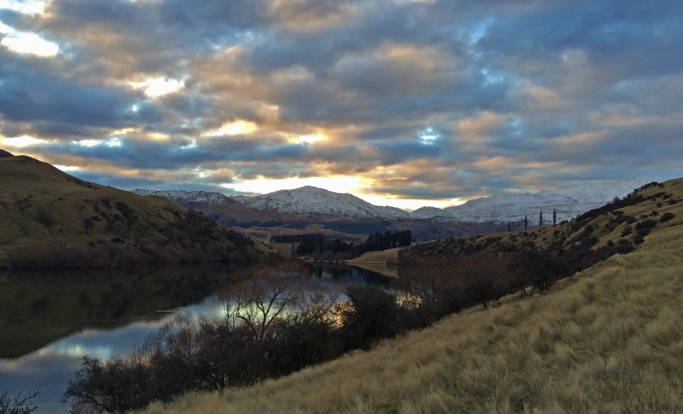
The stunning views and jaw dropping vistas that surround Queenstown are surely part of the draw, but it’s only those that really settle down in QT that get it. Yes, the views that surround Queenstown – the sunsets across Lake Wakatipu, the snow capped Remarkables Mountain Range, the tempting summits of Cecil and Walter Peak – those views are absolutely part of the appeal.
Yet for me – and I believe many others – it’s both what lies beyond those views and what those views open up that are the real draw to living here in this far away corner of the world.
It’s the evening runs, the weekend missions into the backcountry, the hikes, the climbs, the casual community races, the epic mountain bike adventures and the overall outdoor focused, adventure influenced and healthy lifestyle that become an influential part of life in Queenstown. It’s that lifestyle that draws so many in and holds them here for much longer than they anticipated.
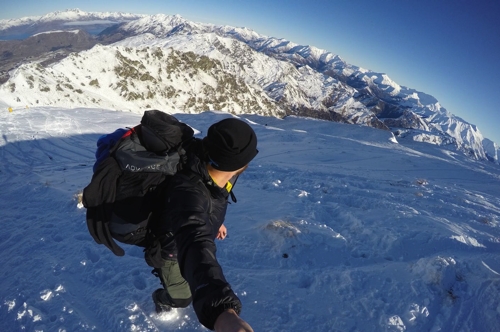
To get a taste of this lifestyle, you need not look any further than a climb up Ben Lomond just outside Queenstown. This 1,748 metre summit is literally accessed directly from town.
This view comes just after passing the Skyline complex at the top of the gondola. If you’re keen to save about an hours worth of hiking through the forest, you can take the Skyline Gondola up through the Ben Lomond Forest for about $15.
After about an hour views of Lake Wakatipu and Cecil and Walter Peak will open up behind you.
Looking south towards the Remarkables.
The hike to Ben Lomond’s summit should not be tackled during the winter unless you’re prepared for ice, snow and alpine climbing.
These photos are somewhat deceiving as the ridgeline was essentially snowless all the way to the summit.
After about two hours of hiking you’ll reach the Ben Lomond Saddle with views opening up into Skippers and Shotover Canyons. From here you can carry on to the summit in about an hour or drop down through alpine tussock into farmland and onto the Moonlight Track which will lead you to Arthurs Point. It’s a solid three hours to Arthurs Point and from here you’ll have to hitch back to Queenstown unless you’ve arranged transport.
The photo above shows the ridgeline you follow to the summit.
Looking north towards Mount Earnslaw…
View of Moke Lake and the mountains beyond…
Expect a return trip from Queenstown to take no less than five hours.
Have you climbed Ben Lomond? Can you suggest any other hikes around Queenstown? Let us know in the comments section below.
31 October 2011
This is a guest post by Rebecca Hall.
I have suffered from wanderlust ever since a teenager and at the tender age of 19, took myself off to Australia for a year. Various job roles in my 20s at LHR airport enabled me to satisfy my wanderlust, but it’s only in my 30s that I’ve started to look closer to home (the UK) and discover Europe.
Athens, as of late, thanks to the atrocious international reportage, conjures up images of rioting pensioners alongside hooded youths, baton wielding fascist policemen and you can almost smell the teargas and hear the cries of the people with raised fists. Yes, riots do occur – the Greeks are, luckily, not a nation to take things lightly and moan about things, yet do nothing about them.
Picture, if you will: old Greek men, sitting outside various ‘cafénios’ in their neighbourhood discussing politics, twiddling their worry beads and looking at the young piece of ass that’s walking by (strangely, it’s never disgusting and never feels threatening). Hear the cries of the weekly neighbourhood farmer’s street market (bound to be one near your hostel) and be greeted in Greek by the stall holders – “Kali mera!” Smell the freshly ground Greek coffee from the cafés and know that you can comfortably sit there, nursing just one coffee for hours and not be asked to purchase another one or move on.
Eat Gyros, the incredibly healthy Greek fast food – chicken or pork and chips (fried in olive oil) wrapped in a pitta with salad and tzatziki (that yogurt, cucumber and garlic dip). If you’re incredibly lucky, you might even be spat on by an old Greek lady. Yes, this happened to me in my first week in Greece – I picked up an old lady’s shopping she had dropped on the floor. She thanked me, looked at me then promptly spat at me three times (well, on the floor in front of me to be fair). It’s a compliment to any woman – it means you are considered a beautiful person and they are warding away the ‘Evil Eye’ – lest someone become jealous of you and place a curse on you.
And so, with an obvious passion for “all things Greek,” here are seven tips for your experience traveling in Athens.
Don’t just come to Athens, see the Acropolis, changing of the guard then head to an island. Why not take yourself off to Exarchia, traditionally known as the ‘anarchist’ area of Athens. Full of great graffiti and very trendy bars and cafés, Exarchia is THE place to be.
Nearest metro: Omonia (red or green line) – about a 10 minute walk down the side alleys.
Every Sunday in Monestiraki, the outdoor flea market opens up. Wander around and browse at the weird paraphernalia: anything from army gear, old dial telephones to coins, books and vintage clothing.
Nearest metro: Monesteraki (green line).
Don’t plan it – do as I do…rock up, take the next ferry and see where you end up. I have ended up on: Poros, Naxos, Paros and Aegina. Poros and Aegina are nearer to Athens and are served by high speed catamarans, therefore more expensive. But it is possible to get a ‘slow boat’ there.
Naxos & Paros are about 5 hours away by normal ferry. At both beautiful islands, guesthouse owners meet you off the ferry and bargain away. In the high season of August in Naxos I managed to bag a room for 30 Euros a night. Between two of us (15E each), that’s pretty good.
Located behind a small wooden door down another side street in Monestiraki, The Art Foundation bar is situated in the garden of an old, run down art deco building. Open till very late, it’s popular with the arty crowds. Enjoy a drink whilst browsing the strange exhibits in the upstairs rooms.
Nearest metro: Monesteraki (green line).
Located in the Peloponnese, approximately 2 hours by coach from Athens, Epidaurus stages theatrical performances every year in the summer in an ancient amphitheatre. In July 2011 I was lucky enough to watch Kevin Spacey perform in “Richard III” as part of the Athens Festival – for 20E! The acoustics are spectacular so regardless of where you sit, you can hear every word uttered.
Take a coach from Athens – on performance days’ special coaches run for only 20 Euros. And if going on a performance day, please take a cushion!
Athenians are avid cinema goers. In the summer, the outdoor cinemas throw open their doors (or roofs) and a whole new experience in cinema begins. My favourite is Cine Paris – located near the Acropolis. You can have your own view of the Parthenon whilst you watch the latest movie – or sometimes even an old black and white Hepburn flick.
Nearest metro: Acropolis (Red line)
A World Heritage site (and used many years ago in the filming of a Sean Connery “James Bond” movie), Meteora is located in Central Greece. Translating as “suspended in the air” or “in the heavens above,” here you will find the 6 monasteries built from the 14th Century onwards atop the high rock formations.
Nearest station: Kalampaka – take the train from Larissa Station in Athens, approximately 4 hours journey time.
Yes, Greece is suffering big time at the moment – but she has so much to offer a person, so long as you are willing to open yourself up to her strange customs and are willing to integrate. Don’t just come here and be a backpacker – really try to get into the community and appreciate all this country has to offer. Don’t always believe all you hear on the news.
Have you traveled to Athens? Leave any tips in the comments section below.
About the Author: I’m a 30 something English Language teacher, currently in Greece. I’ve travelled to, lived and taught in Sri Lanka, Egypt and even helped Eastern European crew with their English whilst on a Container ship travelling across the Atlantic. All experiences have helped shape who I am today. Follow my journey and send me your Athens questions via my blog Leavingcairo.Blogspot.com.
13 October 2011
If you’re considering a working holiday in Australia or even an extended backpacking trip, you’re bound to have heaps of things on your mind. Contributing author Lauren Fritsky is based in beautiful Sydney and nails out 15 tips to help make your first experience backpacking in Australia stress-free.
Cathay Pacific Airways deposited me in Kingsford Smith International Airport with no apartment lined up, the bare minimum in savings and two suitcases stuffed with my life. It was hot, I’d lost the address to my hotel and I couldn’t get the SIM card in my prepaid phone to work.
I’m happy to report my state of affairs has improved since then. Still, knowing a few things would’ve helped me acclimate to Aussie life a bit easier.
Immigration recommends work and holidaymakers bring AUD$5,000. This isn’t enough. Sydney and Melbourne are some of the most expensive cities in the world. Plus, costs for items like produce have shot up since the floods earlier this year.
Consider using a fee-free credit card for some purchases. If you can’t be trusted with plastic, transfer as much money as possible to an Australian bank account to avoid fees of $50 or more for each transfer and debit and ATM withdrawal surcharges from both countries.
Hostelling International memberships cost $25 a year and shave a few dollars off your hostel stay each night.
There’s a reason an Australian wrote the “Everybody’s Free (To Wear Sunscreen)” song in the 90s. I got sunburned so bad when I got here, I had a mark on my thigh for almost a month. Did I mention I’m olive-skinned and usually tan?
The out-of-pocket cost for a GP visit is around $60 in Sydney — about $150 less than going to a specialist first. Check out this post for more on travelers’ health insurance in Australia.
You can call the States and Canada from Australia for free on Google phone through 2011. FREE!
I bought a $99 USB modem only to pay $60-plus a month for spotty Internet. I now pay half that for unlimited wireless at my apartment. If you’re hopping about, skip the hostel Internet and head to libraries or McDonald’s to get it for free.
You can get one-way bus fare for the starting rate of a cab in Sydney. It’s then $2 per kilometer plus a 20-percent surcharge if traveling after 10 p.m. Save your money.
Or have someone drive for you. You can explore the many dirt paths, colorful landscapes and coastal areas a lot better if you’re in a two-passenger car instead of a 25-person tour bus.
Chat with old folks, the people born and raised in Oz, the immigrants who came there for a better life. Their stories and observations will open your eyes.
“Suburb” doesn’t mean the same thing in Australia as it does elsewhere. Many Oz suburbs are diverse and alive with a vibrant arts scene and café culture. In fact, you might prefer staying in a suburb over a CBD — rent is heaps cheaper.
Emails go unanswered for weeks, buses rock up 30 minutes late with no explanation and service in restaurants is often non-existent. Just repeat “no worries” to yourself.
I thought I could get another year out of my work and holiday visa by picking fruit. It turns out Americans aren’t eligible, though Canadians and many European citizens are. While one immigration lawyer said I couldn’t get on my American partner’s work visa, it turns out I could (and did). Make sure you research and talk to the right people if you want to stay longer.
Myall Lakes, the Central Coast, Royal National Park and Ku-ring-gai Chase are all beautiful places as worth seeing as Great Ocean Road and the Great Barrier Reef.
Know to say a “flat white with two sugars” when ordering coffee. Call peppers “capsicum,” cheddar cheese “Tasty” and shrimp “prawns.” It’s the Aussie way.
Have you traveled to Australia? Do any of these tips ring true to you? Add your tips for backpacking in Australia to the comments section below.
Continue reading...5 September 2011
I’ve based myself in New Zealand for the past 22 months – give or take, that’s about 660 days.
The time just slips away. They say that happens the older you get, and while I don’t doubt this is true, I’m confident the happier you are someplace and the more content you are with your life, the quicker the hours, days and weeks disappear.
I originally left home in 2007 to explore the unknown; I wasn’t ready to settle down and had a deep desire to see more of this world we live in.
The journey to where I am today has been a roller coaster of highs and lows – undoubtedly, the moments of pure elation outnumber the challenges.
I’ve traveled the world by way of working holidays in an effort to gain a better understanding of the cultures of the countries I’ve traveled through. In between or during these working holidays, I’ve managed to backpack to some exceptionally special places. Without a doubt, there is so much more of this world I’m yearning to see – the rest of Southeast Asia, Eastern Europe, China, South & Central America and the list goes on.
Many of the posts in the archives of this blog encourage others to leave the comforts of home, pack a bag, and explore far away places. As the tagline of this blog says, Life’s a Journey; I believe the world begs to be explored, experienced and learned from.

Each day that passes here on the beautiful South Island of New Zealand reinforces my indescribable love of this area of the world. Weekly Daily, I’m reminded of how special this place is and I find this terribly frightening.
While I still have the desire to travel to new places, right now I’m beyond content with my life in New Zealand. Most of the time, at least. I do still get that itch that only those inflicted with the bite of the travel bug know. Reading about Adventurous Kate’s travels through Europe to TBU or the Mobile Lawyer’s adventure on the Ultimate Train Challenge still leave me with that taste for wanting to experience new things and face new challenges.
The problem is there is so much here I still want to do. I want to climb Mitre Peak. I want to compete in a multi-day adventure race. I want to go surfing in the Catlins. I want to ride my bike in a brevit. I want to get into backcountry snowboarding.
I love my job, my quaint rented lakeside bach with lake and mountain views, my mates and the lifestyle that New Zealand brings on. The budding minimalist that was me in Thailand traveling with only a Macpac daypack is slowly beginning to acquire things - a bike, bike gear, a snowboarding. Potentially a kayak and climbing gear? A second bike?
At what point do I become a hypocrite who encourages others to leave home and travel the world while I stay in this comfortable bubble which I like to call paradise?
I haven’t moved on permanently from being a backpacker. I continue to read travel blogs, add experiences to my bucket list and still yearn to see more of this world. And I will. This working holiday has simply continued on for longer than anticipated. I’m one of many who have come to Queenstown and stayed longer than expected – if you’ve traveled here, you’ll certainly understand why.
I love my life here and for the time being I’m content with that. There is certainly more of this world I want to see – but for now, that’ll have to wait for another day.
Continue reading...8 August 2011
This is a post by contributing author Lauren Fritsky of TheLifeThatBroke.com (@LaurenFritsky).
Using eco-friendly products, recycling and eating locally-grown food can be easy — at home. Yet if you’re on a RTW trip backpacking in Thailand, Sydney or Vancouver, you might find it difficult to keep up with your environmentally-conscious lifestyle. To help you stay green while backpacking around the world, we asked some globetrotters for their tips on staying green on the road.
Check out these green travel tips from some travelers in the know…
“I try to minimize my carbon footprint by limiting my use of plastic whenever I can. Instead of using plastic shopping bags at markets or shops, I use my Chico Bag. It’s lightweight and small enough to fit in my purse every day — and doubles as a beach bag or picnic basket when necessary. Instead of constantly purchasing plastic bottled water, I just fill up my stainless steel Klean Kanteen with cold tap water.”
“When my husband and I travel, we will always choose a holiday rental over a hotel if we can — and primarily for ‘green’ reasons. By staying in an everyday house/apartment, we’re using an existing resource and one that uses a lot less energy than a hotel, so we’re leaving a smaller environmental footprint. We will recycle if we can, re-use our towels, and not waste food — all things that hotels make difficult to do!
We’re also contributing to a local community, shopping at local markets and using local businesses, and we’ll always buy local, seasonal produce rather than imported products, so all in all it’s a much more sustainable and responsible way to travel.”
“I’ve been using the same knockoff Nalgene water bottle for the last probably five years. It’s good to refill before a flight instead of spending $5 on one you will throw away. I’ve also stored my toothbrush inside so it doesn’t get dirty, as well as filling it with boiling water to keep my bed warm. Multi-purpose!”
“Pay a little more. It’s not much difference in price, but using accredited local tour guides makes a huge difference to the sustainability of the local tourism industry and the local communities you’re visiting. The guides are also way better and funnier. Fact.
Unfortunately with limited infrastructure for processing waste, packaging from Western manufactured products is an issue [in Africa]. As such, you’ll often see rubbish being thrown into the streets due to a lack of knowledge and understanding — lead by example and hold on to your waste until you find a bin. Also, ask companies what they are doing to help combat the issue in communities from which they are profiting.”
“I think one of the best ways to maintain a green lifestyle during travel, aside from choosing means of transportation that will keep your carbon footprint to a minimum (trains, public buses, hybrid vehicles, etc.), is to immediately seek out local recycling centers upon arrival at your destination. If necessary, ask locals where you can recycle plastics, glass, paper and other products to not only maintain the eco-habits you practice at home but to respect the environment you are visiting.”
“When I travel, I would say that the most ‘green’ thing I usually do is take public transportation and/or walk most places I go. I usually try to see most places on foot for a number of reasons. First of all, I think that’s the best way to get to know a place & discover things you might otherwise miss. Also, it gives me a bit of exercise to work off all the calories I typically eat when I’m on holiday!”
What are your green travel tips? Leave them in the comments section below.
Continue reading...13 July 2011
….oh, hey there!
Sometimes I forget that while I’m tucked away on the bottom of New Zealand’s South Island on the bottom of the world enjoying the start of winter, chances are it’s pretty warm where you are.
Not in Queenstown. See that. No, not up there. Down there.
That was my view early Sunday morning as I was heading up Coronet Peak – one of the ski hills just outside of Queenstown. It had been dumping powder for about three straight days.
The White Gold has arrived in Queenstown. So, you’ll have to excuse my tardiness to the party. What party?
In a brilliant effort to gain backlinks to their website, the folks over at TripBase.com have put together a campaign where bloggers delve through their archives to find some of their gems that might have gotten lost along the way – and then tag five fellow bloggers and ask them to do the same. Steph over at Twenty-SomethingTravel.com, Dylan from TheTravellingEditor.com, and Kate from AdventurousKate.com all tagged me. What can I say? I’m a popular guy.
One of the biggest downsides to the traditional travel blog is posts in the archives often get missed unless A) A devoted reader digs through the archives and wipes the dust away from old and forgotten posts B) They’re featured in something like the Featured Posts slider on the main page C) Google likes you or D) You tweet them manually.
So, I’m quite excited to dig through the archives and present to you – My 7 Links.
Over the previous 18 months or so, I’ve moved away from writing posts in the first-person, narrative format and tend to write posts that provide practical advice for backpackers or budget travelers; however, some experiences aren’t best described in the way – as was the case with this post. As any writers or bloggers know, sometimes you’re just not ‘with it.’ Regardless of how hard you try, the inevitable writers block just stands in the way.
The opposite of this – the times when the words, the experiences, the tastes, and the smells flow endlessly out of your head and onto the paper or the computer – are absolutely fantastic.
This was one of those times; I was back on the road for the first time in months and this post documents my experience arriving in Kuala Lumpur.
The most viewed post on Backpackingmatt.com outlines 7 ways (a popular number in the archives) you can travel longer, farther and more comfortably – all while on a budget. I find the key is making sure that while you may be living out of a backpack, you ensure you keep some normalcy in your day-to-day life.
I expected this post to raise some eyebrows, however not to the level it ultimately did. While it was controversial, the comments that resulted from the post (92 and counting) are full of fantastic counter-arguments that offer completely opposite advice of what I put forward. Gary from Everything-Everywhere.com disagreed very strongly with everything I had to say and went as far as challenging me to a ‘blog mentor competition’ of sorts that I ultimately turned down. Gary put together a follow up Webinar where he provides some traffic building tips of his own. It’s well worth a watch.
While the tips I outline work well for me, this clearly isn’t the end all and ultimately you have to find what works well for you.
I’ve been based in New Zealand off and on for the past 18 months. I’ve traveled from the North of the North Island to the South of the South Island – from Cape Reinga to Bluff. I’ve jumped off bridges, been on multi-day hikes, flown over glaciers, looked for jobs, climbed mountains and drank some of the best Sauvignon Blanc in the world.
This post presents 15 tips that will make your arrival to New Zealand easier, your trip planning more effective and will allow you to have the best possible experience in the Land of the Long White Cloud.
Can you believe it’s aleady July of 2011? Crazy. Time flies, eh? Way back at the end of 2010, I was looking back at the previous year of travel and put together this post.
It focuses on the unexpected – it’s this aspect of travel, the unplanned and unanticipated events, that often make for the best memories, the most challenging situations and the defining moments of life’s journey. 2010 had its ups and its downs, and it was great to see feedback in the comments from those of you who also travel for the unexpected.
Whilst backpacking in New Zealand last year in my campervan named Max, two good mates, my ex-girlfriend and I randomly came across the small little village of Te Kuiti. Most days of the year, you’d carry right on through TK (as we learned the locals called it) to your next destination. Not us.
Yes, you read that correctly. Pamplona has the running of the bulls. Te Kuiti has the running of the sheep. This post examines this ‘only in New Zealand’ type festival and features some photos of the woolly beasts.
If I look back on the last two years of my life, one of the best decisions I’ve ever made has been launching this travel blog. How is that for a statement?
This space has allowed me to document my travels, share my journey with you, and meet so many like-minded individuals; it’s landed me jobs, provides a bit of income and has most importantly has given me the chance in one way or another to connect with people that are considering escaping their comfort zones and also traveling the world.
If you’re planning a trip around the world, I think you should be writing a travel blog, and this post explains why.
Thanks for coming along. Now, it’s my turn to share the love – head on over to the party with…
So, did the project work? Are any of these posts new to you? Let me know if the comments section below!
Continue reading...4 July 2011
Last week I posted a photos of one of my favorite day hikes near Queenstown New Zealand. Hiking is a fantastic way to get a feel for wherever it is you’ve traveled to – plus, it’s budget friendly; as they say, views are nearly always free. Today, contributing writer and Australia based Lauren Fritsky (@laurenfritsky) of The Life that Broke takes us on some of her favorite hikes across the ditch in Sydney.
One of the first things I did when I got to Sydney 18 months ago was the Bondi to Coogee walk.
Guidebooks highlight the activity and locals recommend it. I expected just a nice stroll along the water. I got instead endless ocean views punctuated by carved cliffs, greenery and golden shores all along the 5km walk. I didn’t even care that the temperature read 30 Celsius that afternoon.
Since that mid-summer day, I’ve taken heaps more hikes in and around Sydney. From bush to beach, beginner to advanced, short to long, there’s a hike for everyone here.
Next to the Bondi to Coogee walk, Spit to Manly ranks among the most well-known and recommended hikes around Sydney.
It’s 9km total, but you can break it down into more digestible bits if it’s too hot, too hard or you’re too hung-over.
Insects and reptiles, multi-colored flowers and views of Sydney’s Middle Harbour greet you along the way. Stop for a snorkel in the bay on your way to Manly Wharf and you might see a little penguin in addition to the array of fish, shells and other sea life.
At the end of Manly Beach, you can explore an area along the shore with large rocks, small ponds, black crabs and other critters. You get there by walking up the stairs in the back corner of the pools, then up the cliffs overlooking the beach (not the pedestrian walkway to Freshwater).
There are a few larger rocks you’ll have to scale, and it’s rarely a smooth, straight path, so don’t wear thongs or slippery shoes.
You can choose from hikes of varying levels of difficulty at this historical parkland an hour north of Sydney. One of the more challenging ones, the 5.4km Resolute Loop, takes you to Resolute Beach, an isolated strip of shore where you can take a dip in the turquoise water with a few other bathers.
You can also see Aboriginal rock formations along the level portion of the path before the descent to the beach.
This is another location with a variety of hikes, but one of the more scenic and challenging is the climb up into the headlands if you do the Mowlee Ridge to Garie Beach hike in reverse.
The full 6.7km path will lead you to rock edges covered in heath.
Wilderness walk meets shore stroll as you hike up this hilly 5km track. After taking the Palm Beach ferry to Wagstaff, you’ll climb a hill, then walk a flat ridge through to the bush to some cliffs. You’ll get good views of the sea, the Hawkesbury River and Lion Island from the Box Head ridge. You can also walk down to the bayside beach called Lobster or Tallow Beach on the ocean side.
This list by no means covers all the hiking possibilities in the Sydney area, but it can provide a guide to the new walker.
Have you traveled to Sydney? What are your favorite hikes?
Continue reading...23 June 2011
Most travelers who come to Queenstown stop after taking in the staples of this epic little resort town on New Zealand’s South Island.
Bungy jumping. Check. Jetboating. Check. Skydiving. Check.
While these activities (and more) are on offer in the Adventure Capital of the World, the shining light in Queenstown is the huge variety of hiking, biking and simply stunning scenery that sits literally on little Queenie’s doorstep. While you’ll get a taste of what this area of the world has to offer when you hop on the cramped bus to Milford Sound (and you should), to really understand Queenstowns natural beauty, you’ve got to check out some of the exceptional nearby hikes (and bike rides) which are begging to be explored.
In the past six months, I’ve developed a passion for taking in and really experiencing everything the Southern Lakes of New Zealand has to offer.
There are a couple of fantastic hikes which leave from Queenstowns central Shotover Street. Head up through the Ben Lomond forest, past the AJ Hackett Ledge Bungy site, and head back to towering Ben Lomond. For something less strenuous, check out the hike up to the Queenstown Hill; both afford priceless views of Lake Wakatipu, Cecil Peak and the aptly named Remarkables.
The opportunities for exploration are opened wider if you have your own transportation. If you’ll be in Aotearoa for awhile, consider buying a campervan when you arrive; otherwise, one of the best ways to travel around New Zealand is with your own transportation so hire a car. When you get to Queenstown, head down towards Glenorchy and climb Mount Alfred.
This 1,375 metre peak juts out between the Dart and Rees River valleys and simply begs to be climbed. Natureshop.co.nz recently offered me some hiking gear to sample and I tackled Mount Alfred for the second time with my flatmate Jo, a pair of Keen hiking boots, and a Merino Icebreaker midlayer. Excellent gear for what might just be one of the best day hikes in the greater Queenstown area.
The hike begins from the western side of Mount Alfred in the Dart River valley; follow signposts to the start of the Routeburn Track and you’ll see the carpark where the track begins about 20 kms from quaint Glenorchy.
As usual, DOC (the Department of Conservation) overshoots the realistic time it would take for someone of a reasonable fitness to hike the track; while my flatmate and I managed to do the hike in under four hours, this included a fair bit of running on the decent. Basic hiking should have you to Alfred’s nearly 1,400 metre summit and back in a cool 5 – 6 hours.
Even those with a minor affliction to vertigo should be able to handle the scrambling that is a welcomed break-up to the half day adventure.
The first two hours is spent climbing through ancient, moss covered, silver beech forest which is prevalent throughout this area of New Zealand. New Zealand’s largest remaining indigenous forest will keep you company as you climb 600 or 700 metres above the valley on a well defined trail.
I tackled Mount Alfred with these Keen Targhee Mid II hiking boots. They were excellent for the hike with a 4mm sole that provided a solid bit of traction over the slippery roots, rocks and leaf covered trail. While a more rigid boot might have been beneficial, I enjoyed the flexibility that these boots provided. Solid enough to provide some ankle support going up; yet flexible enough to do a bit of a trail running coming down.
About two hours into the climb, you eventually reach the bush line where the beech forest ends and the tussock begins.
While the trail isn’t marked from this point on, there are a couple obvious routes that will take you the the plateaued summit. Vere slightly left and an easy scramble will take about 30 minutes to find the top.
The final scramble to the top is an absolute rush; especially with the cold wind whipping off the valley – it’s a fantastic feeling to finally pull yourself up onto the summit. The 360 degree views are quite simply stunning.
While there was a bitterly cold gale at the summit, the Icebreaker mid layer (made from New Zealand wool) provided a great insulation from the bone-chilling cold.
After popping up to the plateaued summit, you can spend time wandering around and taking the views of Lake Wakatipu, the Dart & Rees Valleys, the Humbolts (if the weather is clear!) and majestic Mt Earnslaw.
Have you been to Queenstown? Add your favorite nearby hikes in the comments section below.
Considering hiking Mount Alfred? Feel free to contact me with questions.
The Natureshop provided me with complimentary gear for this hike but the opinions here are entirely my own; for ‘nature’ inspired products that are friendly to your body and the environment, check out Natureshop.co.nz.
Continue reading...
4 June 2011
This post is by contributing author Lauren Fritsky of The Life that Broke.
As a proud Iowan, I’m a lover of red meat; so, when I’m on the road backpacking, my biggest challenge is finding a steak that can compare with good, Iowa beef. Contributing author Lauren Fritsky has a different problem: finding vegetarian food while traveling the world. Check out these five tips for finding veg-friendly food on your next backpacking adventure.
“Do you have a vegetarian option?”
As someone who doesn’t eat red meat or pork and dates a straight-up vegetarian, I’ve heard a range of laughable responses to this question — everything from:
“Yes, we have fish” to “Just take the ham off.”
Sigh.
Anyone who has stood on a street corner in Asia and watched a shop owner kill a live animal might seriously doubt that vegetarian cuisine is possible in all parts of the world. But it is! Sites like Happy Cow let you plug in your destination and eating preferences to find restaurants around the world.
Veggies on the Road is another resource listing eateries across the globe that offer at least three vegetarian dishes. If you have some semblance of an itinerary, look up your next destination and print out the list of vegetarian and/or vegan restaurants these sites. Don’t forget to smile as you walk away from the cleaver-wielding shop owner to your plate of mock chicken with veggies.
Some people are unsure of what vegetarian really means. The same goes in foreign lands where definitions for the practice may differ and language barriers can make it difficult to find what you want. This resource from the International Vegetarian Union supplies key phrases in many languages to help you find veggo on the road.
You can also use the Veggie Passport iPhone app to translate your food preferences into 33 languages.
Speaking of apps, you’ll never go hungry looking for vegetarian or vegan food again if you have an iPhone. Apps like VegOut and VeganSteven let you find restaurants near you and even pull up the menus.
Weird tip, huh?
If you’re having trouble eating meatless at the local restaurants, try hotel dining areas — even if you’re not staying there — and pubs.
Many people don’t think to try and dine at accommodations they haven’t booked into, but the public is free to eat at places like Marriot. Hotel menus often have a wider variety of options than some of the local eateries, including vegetarian, depending where you are in the world.
Pubs might also have bar menus full of non-meat fare. Even if you have to build your dinner by ordering a baked potato, side salad and hummus with bread, it’s better than nothing.
Did you know that Minnesota actually has a law allowing anyone on a restricted diet to take their own food into any restaurant and eat it right there? Individuals can also ask the wait staff to heat up their food in the oven or microwave.
It’s worth checking if areas you’re traveling to have similar laws.
Even if they don’t, other vegetarian travelers have had success asking restaurants to heat up or cook their tofu, rice or veggies. Sweetness will take you a long way here, so be polite and overly thankful if you’re accommodated. Convenience store microwaves are another option for heating up your homemade or store-bought vegetarian meal if you find an obliging clerk.
Depending on where your travels lead you, you might always have to stay on your toes to find vegetarian. But a little Internet and iPhone savvy plus some local know-how should keep you up to your elbows in tofu from Tampa to Tokyo.
What are your tips for finding vegetarian on the road?
Continue reading...24 May 2011
It’s certainly not how I envisioned things going; yet, as I’ve learned in the last year - things don’t always go as planned.
I certainly never would have expected life to take me to small villages in Ireland, one of Europe’s most inspiring cities – Edinburgh, the markets of Turkey, the fjords of Norway, the canals of Venice, or the mountains of New Zealand.
Luck perhaps isn’t the correct word to use. As anyone branching off into the life of long term travel knows, it certainly has its ups and downs. Be that living in hostels, dealing with budget issues, overcoming travel planning woes or the unknowns that come from leading a life of uncertainty, long term travel is by no means easy.
So 18 months later, I’m still in New Zealand. There have been no shortage of obstacles to overcome in Aotearoa, don’t get me wrong – and ironically perhaps, these obstacles have added to my love of NZ. Overcoming the challenges life tosses at you inevitably shape you into the person you ultimately become.
Like many of my previous experiences traveling abroad, I originally arrived in New Zealand on a working holiday. Working holidays are a fantastic way to properly assimilate into the society of a country you’ve traveled to. You can absorb the culture and take it in as if the country were your home. You get to know its people, see it from their eyes as opposed to the eyes of a tourist.
New Zealand is a country with no shortage of space. It’s a land of sweeping vistas, towering mountains and thick and uninhabited bush. It’s a country with 4 million people, 40 million sheep, and 100,000 square miles of land. New Zealanders love their sport – while there is no question of their love for ‘the rugby,’ they also have a special appreciation for the beautiful country they inhabit and make plenty of efforts to get out and explore it.
Lately, I’ve been right with them.
As I mentioned in my last update, I’ve returned to New Zealand to run NZbyBike.com. I spend my days promoting mountain biking in New Zealand – it’s an epic place to ride, and inevitably, I’ve fallen in love with the sport myself. It’s a bloody great job, yet it’s by no means easy running a web start-up and has been taking up a significant amount of my time.
I’ve developed even more of an appreciation for bloggers like Steph from 20 Something Travel who balanced full-time work along with developing and running a superb travel blog.
In an effort to keep budget travel and backpacking focused posts coming your way more frequently, I’ve taken on a fellow American expat and travel blogger as a contributing writer for Backpackingmatt.com. Expect to see more content from Australia-based Lauren Fritsky of TheLifeThatBroke.com over the coming months with a focus on budget travel and backpacking in Australia.
Thanks for following along – for daily glimpses into my life living in New Zealand, be sure to follow me on Twitter.
Happy Travels,
(Backpacking)Matt
‘Life’s a Journey‘
Please leave your tips for balancing work, travel, and an active life along with running a blog in the comments section below. Alternatively, email them to me at matt (at) backpackingmatt (dot) com and I’ll feature the best in a post next month.
28 November 2011
16 Comments