Bali is a place like no other and offers incredible surf, kind and welcoming people, world-class food from street vendors and fine dining restaurants, and prices that are oh so easy on the wallet. It’s a place where you can relax by the pool or seaside, and experience adventure like paragliding, hiking up volcanoes or diving in pristine waters.
Thailand & Backpacking. The two go together like Sang Som & Coke.
Is backpacking in Thailand easy? For the most part. Should you expect challenges? Definitely.
If you want order, normality, and don’t want to be placed outside of your comfort zone, you probably shouldn’t visit Thailand. Expect language barriers. Expect that someone will try to scam you. Expect to get lost. Expect squat toilets. Expect the power to go out. Expect delayed buses.
If you’re willing to take these challenges in stride and are keen to experience a part of the world that is unlike anywhere else, then backpacking in Thailand is right for you. Here are:
7 Reasons You Should Experience Backpacking in Thailand
1) The Capital City
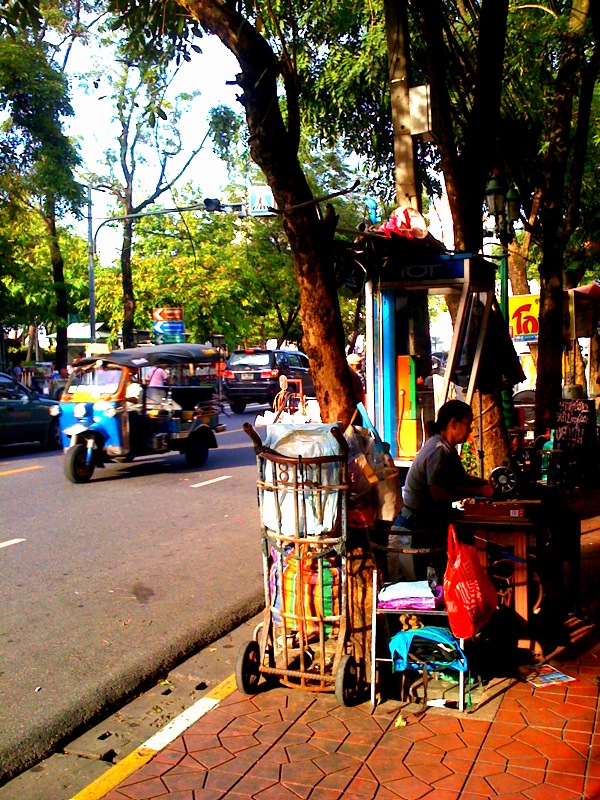
Bangkok Street Vendor & Tuk Tuk
Bangkok, Thailand’s capital city, is a series of contradictions, layered in smog and drenched in heat. It’s a chaotic rush of traffic, horns, and pollution.
You have BMWs sharing traffic clogged streets with dated motorbikes and tuk tuks. Bald-headed monks sporting traditional orange robes ride Bangkok’s excellent public transit system whilst typing away on iPhones. Five star hotels share the same streets as slums that local Thais and immigrants from SE Asia call home.
It’s a strangely addictive city that begs to be explored.
Not to be Missed: Khao San Road, food from the street stalls scattered throughout the city, and the Giant Reclining Buddah.
2) The Locals
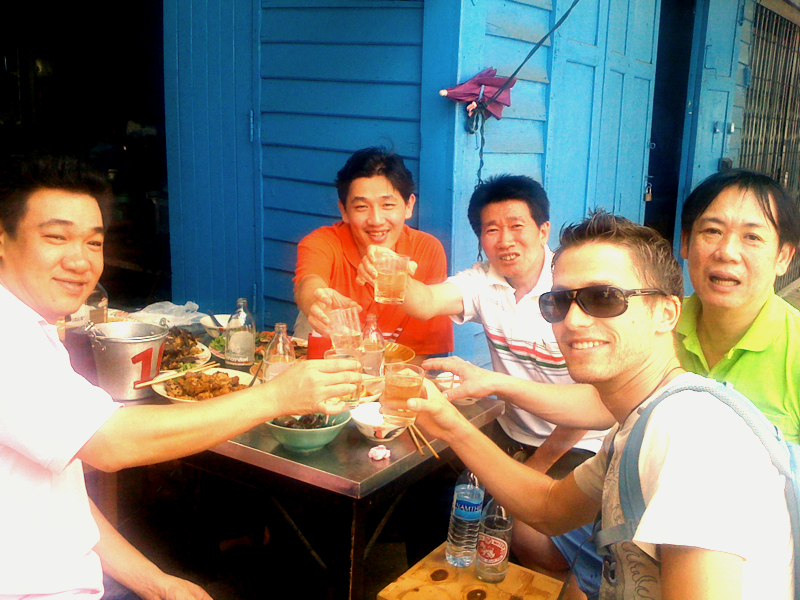
Sanuk – Food, Whiskey, & Smiles With Local Thais
You’ll be hard pressed to find a country with a more welcoming, laid-back, and friendly population (and I’ve just spent a year backpacking in New Zealand). Thailand is called the “Land of Smiles” for a reason, and you can expect a hospitable welcome almost anywhere you travel to.
Mai pen lai translates roughly to “no worries” and is very much indicative of the Thai’s outlook on life. Similarly, sanuk translates to fun and permeates all aspects of Thai culture. Thais love eating together, drinking together, and generally living and having fun together.
Expect smiles, a carefree outlook on life, and generosity – soon, you’ll wonder why you’d ever want to leave.
3) The Nightlife
Partying With Local Thais (credit: @AdventurousKate)
Thais love to party. Your experience backpacking in Thailand should include a healthy dose of the country’s nightlife. Chances are, you won’t be disappointed and you’ll stay out far later than you expected.
Drinking in Thailand is cheap; you can get a beer for $2, a cocktail for $5, and a bucket filled with Sang Som (Thai Whiskey, which is actually rum), Coke, & Red Bull for $7.
Whether you’re drinking in a classy Bangkok club, a Thai bar filled locals, a Koh San Road street bar, or a moonlit and music filled beach, you’ll soon understand that the nightlife in Thailand is second to none.
4) The Cost of Living
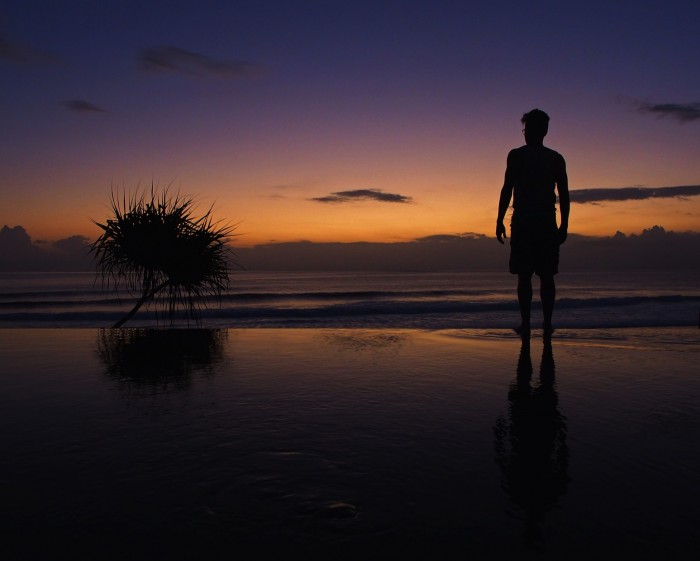
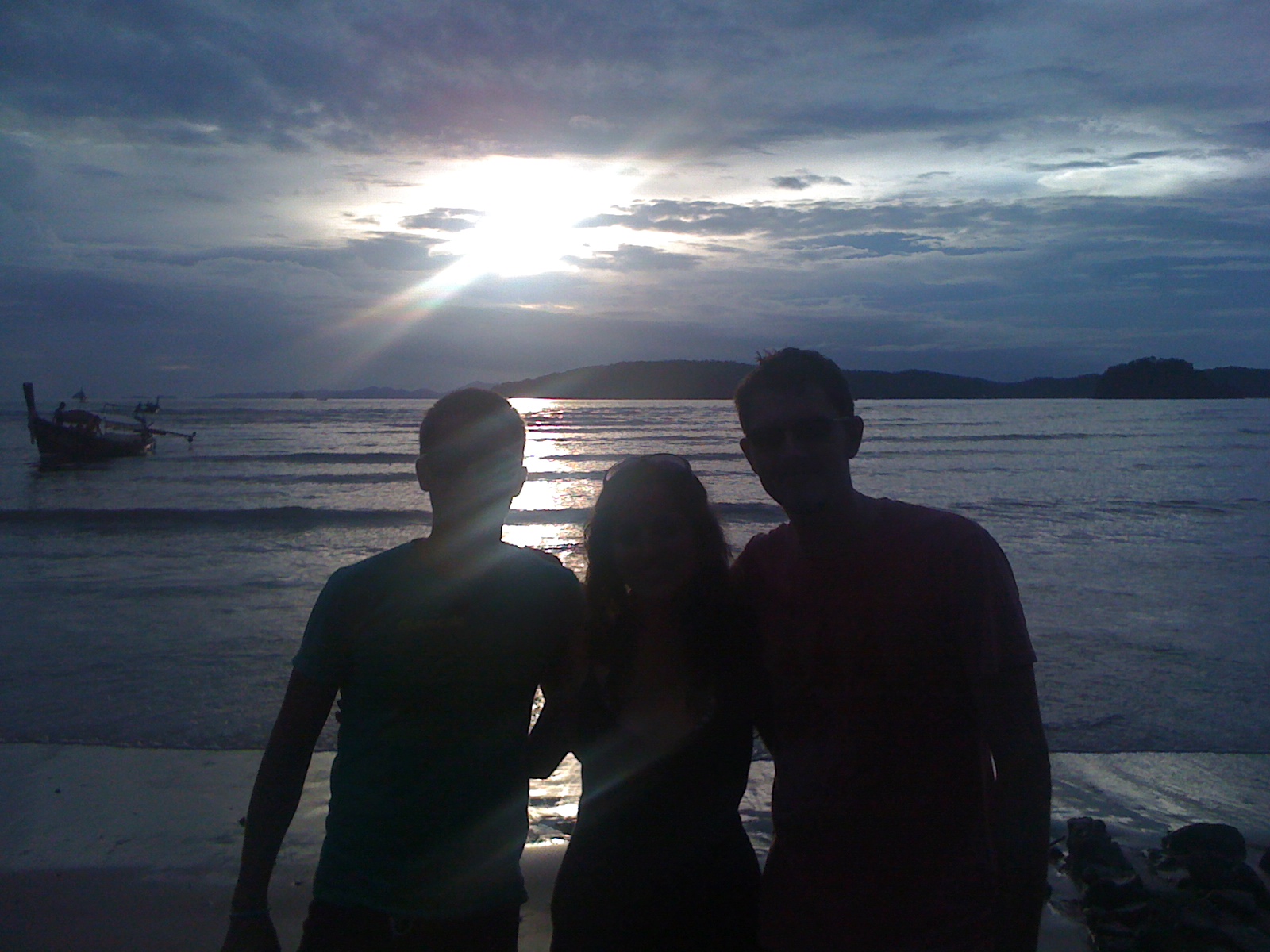
Sunset in Bangkok
To say backpacking in Thailand is budget friendly is a gross understatement.
Backpacking in Thailand is cheap. Really cheap. You can expect quality accommodation for $10 / night, delicious street food meals for $2, overnight air-conditioned bus rides for $15, and a long taxi ride around Bangkok for less than $5.
Adventurous Kate, myself, and a Swedish mate chartered a private longtail boat with a driver on Koh Phi Phi for an entire afternoon. We saw Maya Bay (where they filmed “The Beach”), went snorkeling, and watched the sunset. The cost? $30.
5) The ExPats
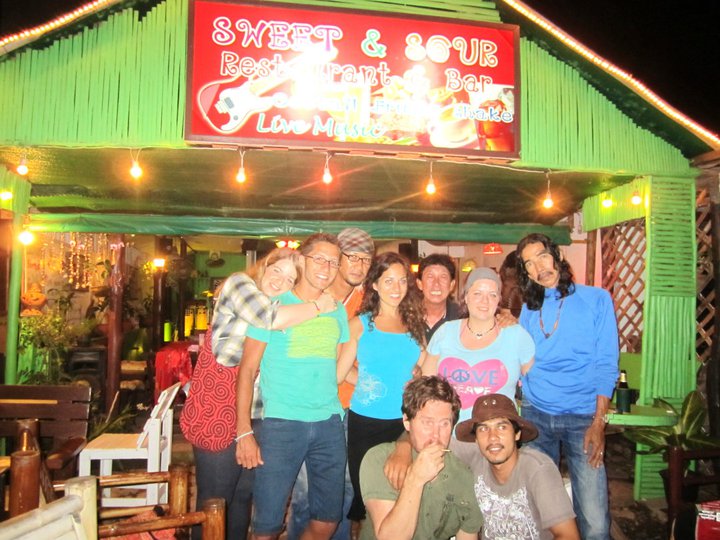
New Friendships
Many people are aware of these advantages and have temporarily made Thailand their home; from location independent lifestyle designers, to dive instructors, to travel bloggers, to English teachers, there is a great group of foreigners who have relocated to Thailand.
And I don’t blame them.
Your visit to Thailand won’t be complete without seeing Thailand through their eyes. Find out the best spots to eat, to drink, and get a feel for what life in Thailand could be like. Just be careful, you may never leave.
6) The Food
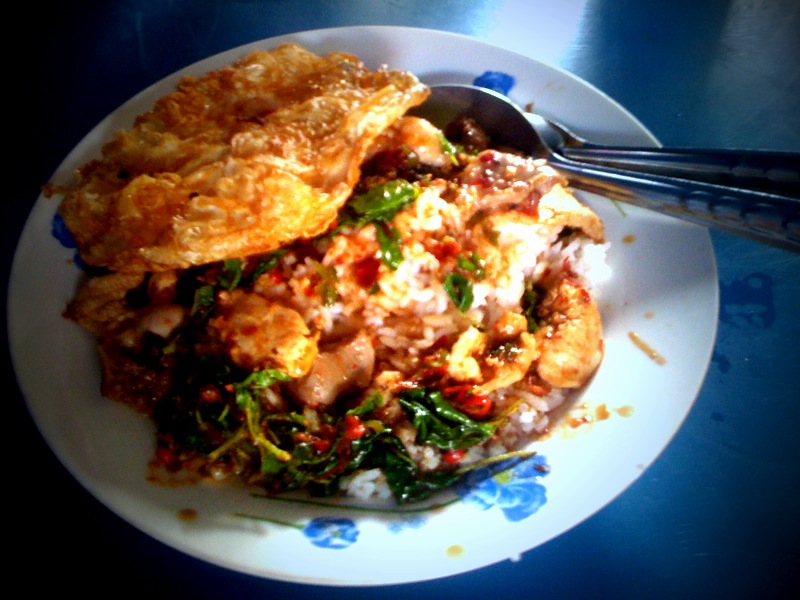
Phad Kra Prow, served from a Bangkok Street Vendor
Thailand’s food is a culinary delight; from spicy curries, to aromatic stir-fries, to barbecued meats, to fried crickets, to the quintessential pad thai noodles, there is something to please even the most discerning backpacker’s palate.
For anyone traveling on a budget, you don’t need to look further than the street vendors scattered throughout Thailand’s streets and alleyways. Street food in Thailand is cheap, it’s delicious, and it’s safe. I ate food from street vendors literally every day for six weeks and wasn’t sick once.
Expect to pay anywhere from $1 – $3 for a full meal. You won’t be disappointed.
7) The Beaches
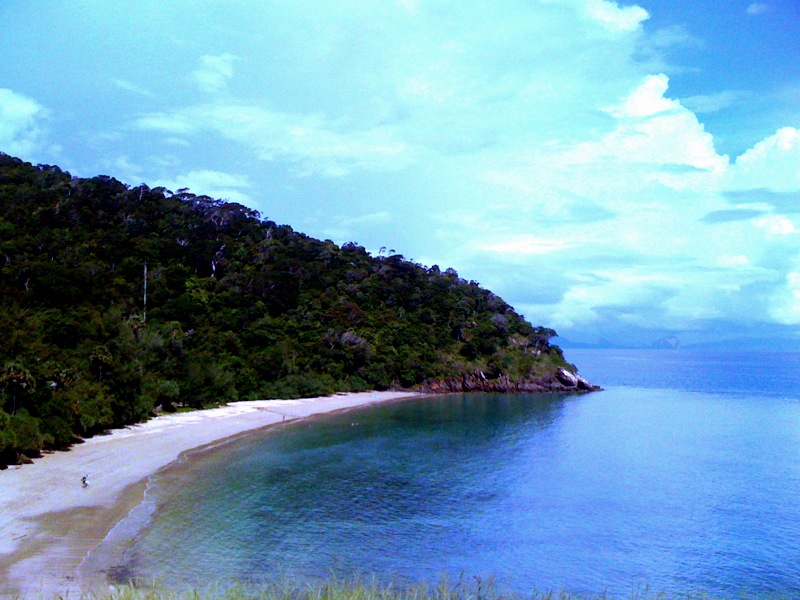
Thailand’s South is a tropical paradise. On the East Coast you have the Gulf of Thailand with Koh Phangan, Koh Tao, and Koh Samui. On the West Coast you have the Andaman Sea with Koh Lanta and Koh Phi Phi.
While each island has its advantages and disadvantages, they all are home to some of the world’s most pristine beaches. Think fine white sand, clear water with tints of blues and greens, and beachside bungalows.
These beaches are the reason many backpackers travel to Thailand and the reason many never leave.
Have you traveled through Thailand? Leave your backpacking tips and top experiences in the comments section below.
During my recent trip backpacking in Bali, I spent much of my time exploring the island from behind the wheels of my very own rented motorbike. It was an excellent, albeit slightly terrifying way to see the island.
From Kuta’s traffic-clogged streets to central Bali’s deserted, steep, and potholed filled tracks through the dense jungle, I was constantly challenged yet very in tune with my surroundings.
It was an ideal way to get around Bali and I can’t imagine my experience would have been anywhere near the same had I relied on public transport.
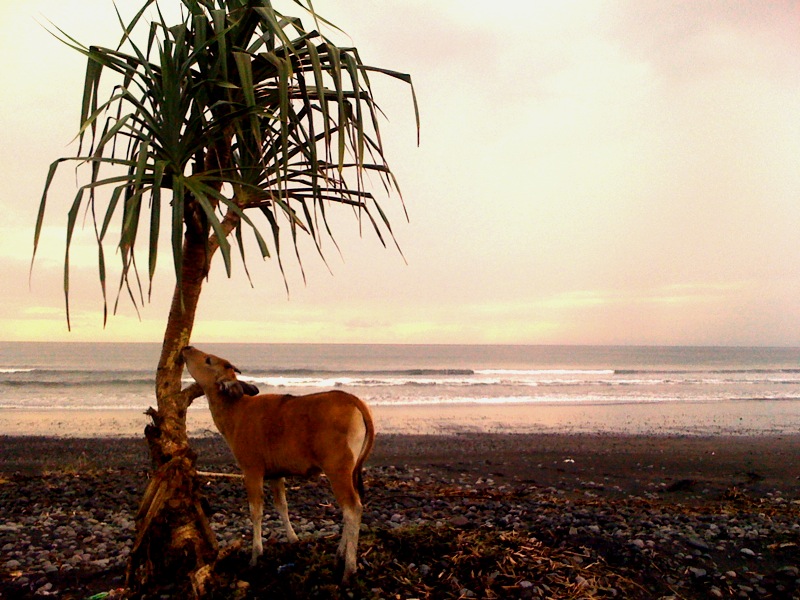
Cow on Medewi Beach
Two quick words of warning regarding the video.
First, at just over 11 minutes, it’s arguably too long. Yet based on much of the feedback I received, a 10 minute long video is watchable assuming you’re entertained throughout. With quick scene changes, a mix of dialogue and views of what I’m seeing, and some interesting facts throughout, I think this works.
Second, as I’m traveling solo, I didn’t have anyone alongside shooting the footage. Everything except the last scene was self-shot. The result? Some scenes are bumpier than others. This was inevitable with a shaking hand and a bouncing motorbike – I hope you can see past it.
I know I shouldn’t bring light to potential faults in the video – yet, I’d prefer you were aware going in.
Grab a coffee, a beer, or a glass of wine and enjoy …
Exploring Bali – A Backpackingmatt.com Travel Video
Highlights
0:50 – I visit the Sacred Monkey Forest to see Long Tailed Macaques just outside of Ubud – see the monkeys and learn about their place in Balinese culture.
4:40 – I visit a “Bali Drive-Through” for some street food.
5:21- While pulled over to check the GPS on my iPhone, I receive a traditional Hindu blessing from a local woman.
8:15 – Heavy rain forces me off the road and into a warung for some Nasi Goreng.
8:40 – While thinking I’m lost on jungle road in a rainstorm, I nearly crash my motorbike.
9:40 – After passing through small villages seemingly in the middle of nowhere, I reflect on the kindness of the people I’ve met before coming across another small village.
Thanks for watching. Please leave your feedback – good and bad – in the comments section below.
When you think of Bali, chances are you envision clear blue skies, white sand beaches, thundering surf and beach-side massages. You might picture thick jungle, vivid green rice paddies, and towering volcanoes. These scenes very much exist in Bali and are the reason I was terribly excited to spend a week in this island paradise.
I expected outstanding seafood, friendly locals, budget friendly accommodation, and a pumping nightlife scene in Kuta.
One thing I didn’t expect was an afternoon spent at a traditional cock fight in the middle of the dense, muggy, and intensely green jungle.
One evening in Lovina, a series of seaside villages in the north of Bali, I met a local who was working at a beach-side bar and restaurant. I was enjoying a few Bintangs (Bali’s beer) along with some Canadian backpackers I had recently met when Putu invited me to a cockfight the next afternoon.
Needless to say, this isn’t an invitation I often get.
Cockfighting plays a very important role in the life of many Balinese men. A cockfight, in the simplest sense, is a fight between two roosters in a caged ring. To many men in Bali, it’s much more than this – it’s an obsession that has been passed down through the generations.
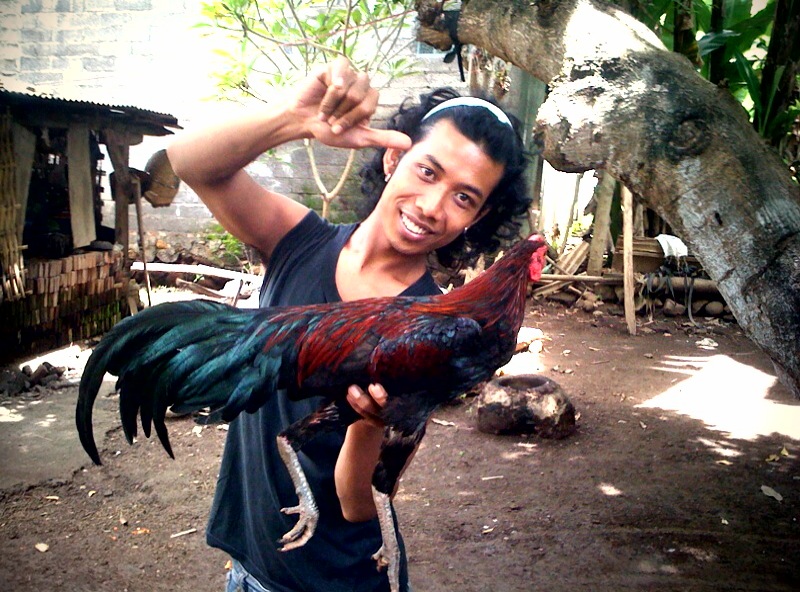
Putu and my 75,000 Rupiah Rooster
Cockfightinging is illegal in Bali and has been since 1981. The only exception is when a cockfight takes place for religious purposes. Bali is an intensely spiritual island made up of almost all Hindus; in Balinese Hinduism, the spilled blood in a cockfight is believed to expel evil spirits.
Although it is illegal, cockfighting takes place throughout Bali. Men will spend anywhere from six months to two years preparing roosters for a cockfight. They are fed high quality food so they develop muscle – the stronger the rooster, the better its chances of winning the cockfight. Cockfighting is so pervasive in Bali culture that you’ll often see men of all ages sitting around, grooming their roosters, comparing weights and sizes, and showing them off to other men in the community.
It’s a very big part of the local culture – and although inhumane by most standards – I couldn’t bring myself to turn down the invitation.
I met Putu the next day and he took me twenty minutes outside of Lovina to his home. Outside this traditional, one-room house, Putu had bamboo cages of roosters of different ages. Though their was a significant language barrier between us, the pride he had in his roosters was overwhelmingly apparent. He pulled out one of the roosters who he assured me was strong, well-fed, and could win in the cockfight.
75,000 Indonesian Rupiahs later (about $8 USD) and I was the proud owner of a two year old Balinese rooster.
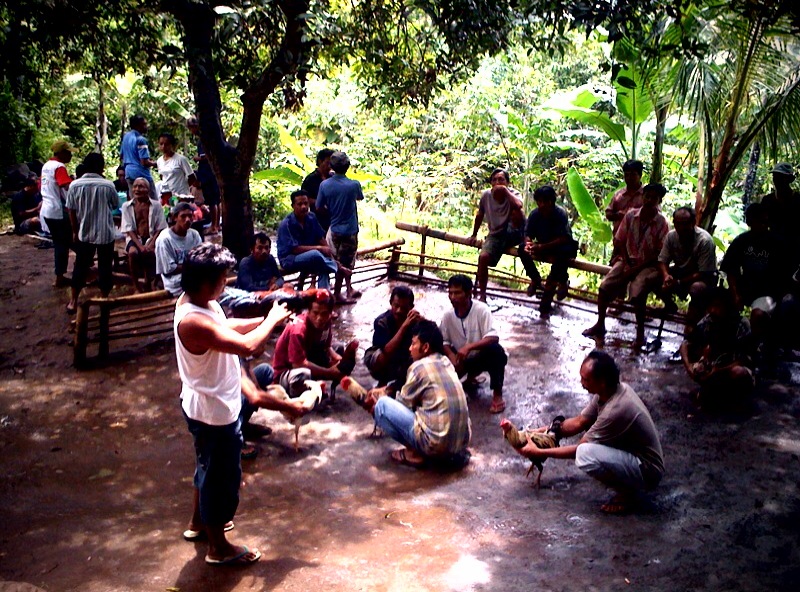
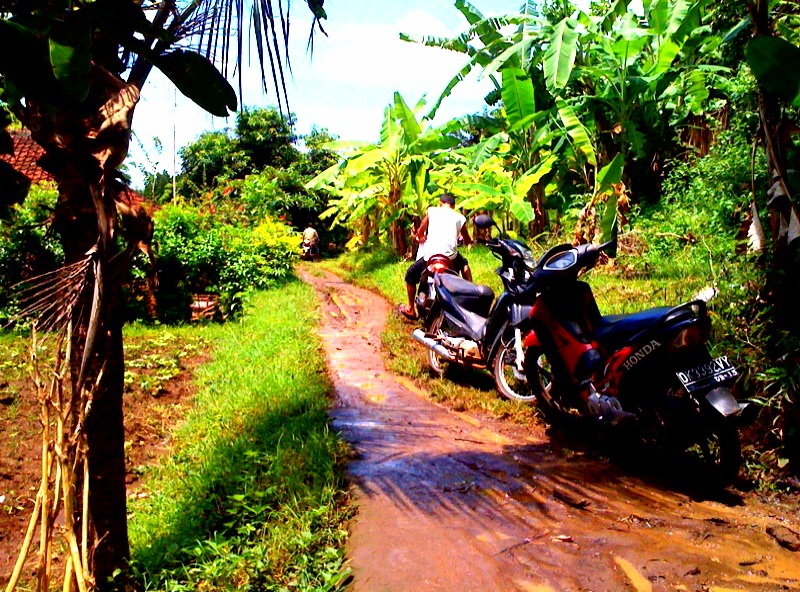
We took our scooters higher up the mountain before turning off the small, single tracked road and onto a muddy dirt trail. We went deeper into the muggy jungle before arriving to the cockpit. There were already dozens of men preparing for the fights; as many of them chain smoked sweet-smelling clove cigarettes, they were preening their roosters and seeking out opponents.
Mud Track into the Jungle
The roosters have a natural aggression towards other males. The first step in the process is seeing which roosters want to fight. After finding a suitable opponent, a third man attaches the taji to each rooster’s leg. The taji is a razor sharp dagger of about four inches – it’s a sacred weapon and the fights are won or lost based on the use of the taji, not necessarily by the pecking that takes place between the roosters.
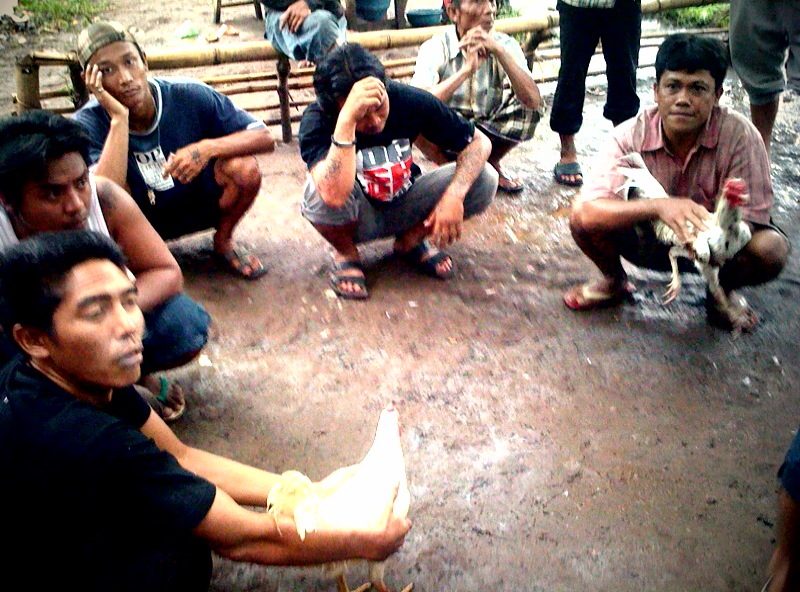
Before the fight begins, there is a chaotic couple minutes while the men around the cockpit place their bets. They shout out the color of the cock they want to win and were placing bets between 50,000 and 1,000,000 Rupiah. The two birds are released in the center of the ring and jump at each other, peck at each other, before one finally slashes the other rooster with the taji.
Preparing for the Fight
It was a quick, somewhat anticlimactic finish to all of the pre-fight negotiations. Those who lost their bets gave their cash to the organizer of the cockfight before another round started.
And what about the loosing cock? The owner of the winning cock gets the body of the looser. Unfortunately, my rooster lost and would have likely then been used to prepare Ayam Pelalah – a spicy, Balinese chicken soup.
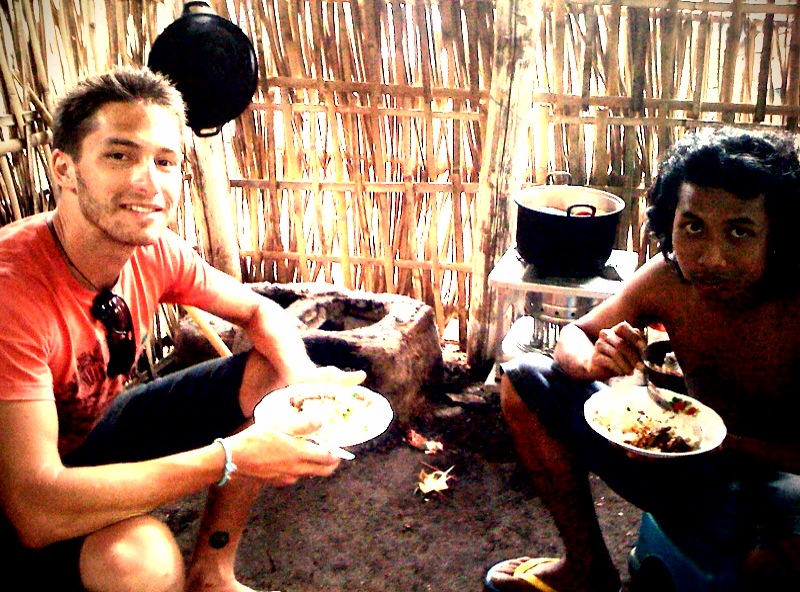
After the cockfight I was invited to Pulu’s traditional home. He introduced me to his wife and his young daughter before serving me an outstanding lunch.
Lunch with Pulu
Their kitchen was outside in a bamboo enclosed room and their stove was a coal fire. As I’ve found many times in Southeast Asia, it’s amazing how those who seemingly have nothing are so giving. They made sure I had seconds, offered me tea, and gave me a gift of a polished seashell.
It was certainly an interesting afternoon – one I’m very glad I was able to experience.
What is your take? Have you been to a cockfight? Would you go? I’d love to hear your thoughts in the comments section below.
I’m writing this November update on an AirAsia flight from Denpasar, Bali, to Bangkok; I’m covered in sand, my face is gray with road grime, but I’m unbelievably happy to be here, as three hours ago I was almost certain I wouldn’t be sitting where I am now.
I woke up just before sunrise this morning in the small, undeveloped village of Medewi on Bali’s West Coast. I hoped to surf for a couple hours before heading to Kuta to catch my flight. By 6:30, I was at Medewi Beach – instead of five star resorts and hawkers, the view from Medewi was intensely green, flooded rice paddies and grazing cattle.
This little corner of Bali has yet to be overdeveloped and it was a peaceful place to spend my final morning.
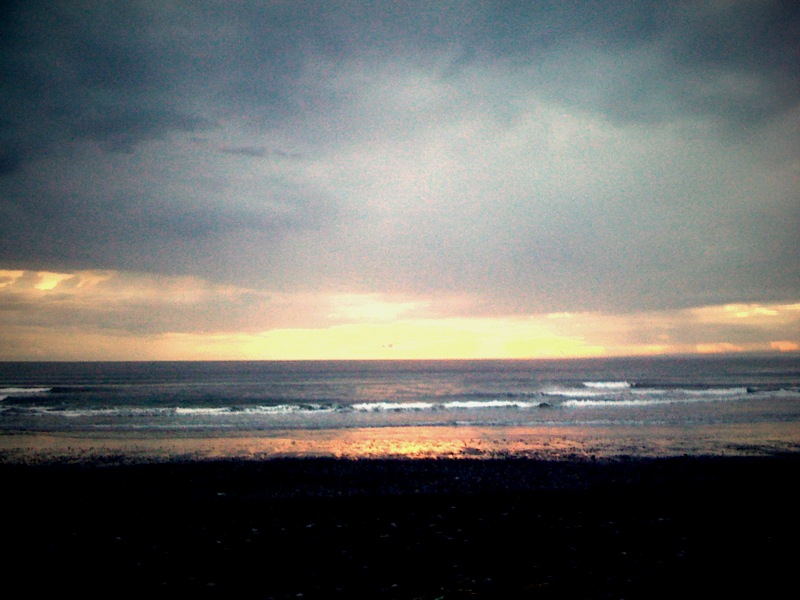
Medewi Beach, Bali
Though I had minimal luck surfing, it was a refreshing way to start the day – and a stark contrast to the mood I’d be in three hours later. Thanks to another meeting with the Bali Polisi, heaps of traffic, and some wrong turns, I was running extremely late. I didn’t think there was any way I’d make my flight.
Somehow, I did. It was an epic journey and you can read more about it here on my post at Flightster.com.
One of the few bloggers who loves New Zealand as much as me, Amanda from DangerousBusiness.com, mentioned my post on Kuala Lumpur in her Best Blogs of the Week. She said, “Matt writes this post in the first-person, and really makes you feel like you’re seeing/hearing/smelling Kaula Lumpur for the first time along with him.“
I was in Bali visiting an old friend from Canada who I met while I was working in an Edinburgh Pub. It had been almost three years since we had seen each other last. I always enjoy reconnecting with friends in random parts of the world. Jess is from Canada, but we first met in Edinburgh, and she now lives in Australia. Who would have ever though we’d meet up again three years later in Bali? Not me.
Bali was fantastic.
While I’m not sure the country is ideal for quote, un-quote backpacking, it was an excellent place to spend a week. Friendly locals, beautiful beaches, thick jungle and relatively budget-friendly, Bali is someplace I’d return to in a heartbeat.
While I was there, I shot a lot of footage of my journey around the country on a rented scooter. Though the filming isn’t perfect as it was nearly all done solo, I’m really excited with how it turned out. Look forward to a Bali Travel Video in the next week as I have some serious editing to do first.
Sweet Mirror in a Seminyak (Bali) Restaurant
I think typically with videos, shorter is better. This one will turn out to be quite long unless I run it in a Part One & Part Two format. I think it flows well and works better as a 12 – 14 minute long video, but maybe I’m wrong.
As it’s you that will be watching it, what would you prefer?
One ten-minute + video, perfect for that morning cup of coffee, that escape at the office, or that evening beer or glass of wine? Or two shorter videos? Pleaseleave your comments below.
I’ll be spending the next three weeks in southern Thailand. In addition to doing quite a bit of work, I’ll be exploring a couple Thai Islands, heading to the Full Moon Party on Koh Phangan, and hopefully meeting back up with Adventurous Kate and meeting Cody from Thrilling Heroics to maybe do some rock climbing in Krabi.
Kia Ora - I'm Matt. Adventurer, Instagrammer and New Zealand travel planning expert living in Queenstown, NZ. Founder of Planit NZ - New Zealand's largest travel planning & booking website.
Hello! I’m Matt. Thanks for checking out my blog. Be sure to follow me on Instagram for loads more New Zealand travel inspiration. Comment on one of my photos so I know you came from here!
This error message is only visible to WordPress admins
Error: There is no connected account for the user 1660330 Feed will not update.





 Backpacking Matt